Phyllomedusa bicolor
 
Sacred Medicine · Members
Kambo
Phyllomedusa bicolor · The frog medicine of the Amazon
 
The Frog
 

The tribes that harvest the venom from the Phyllomedusa bicolor frog revere it and go to great lengths to protect it. The frog is treated with the utmost respect.

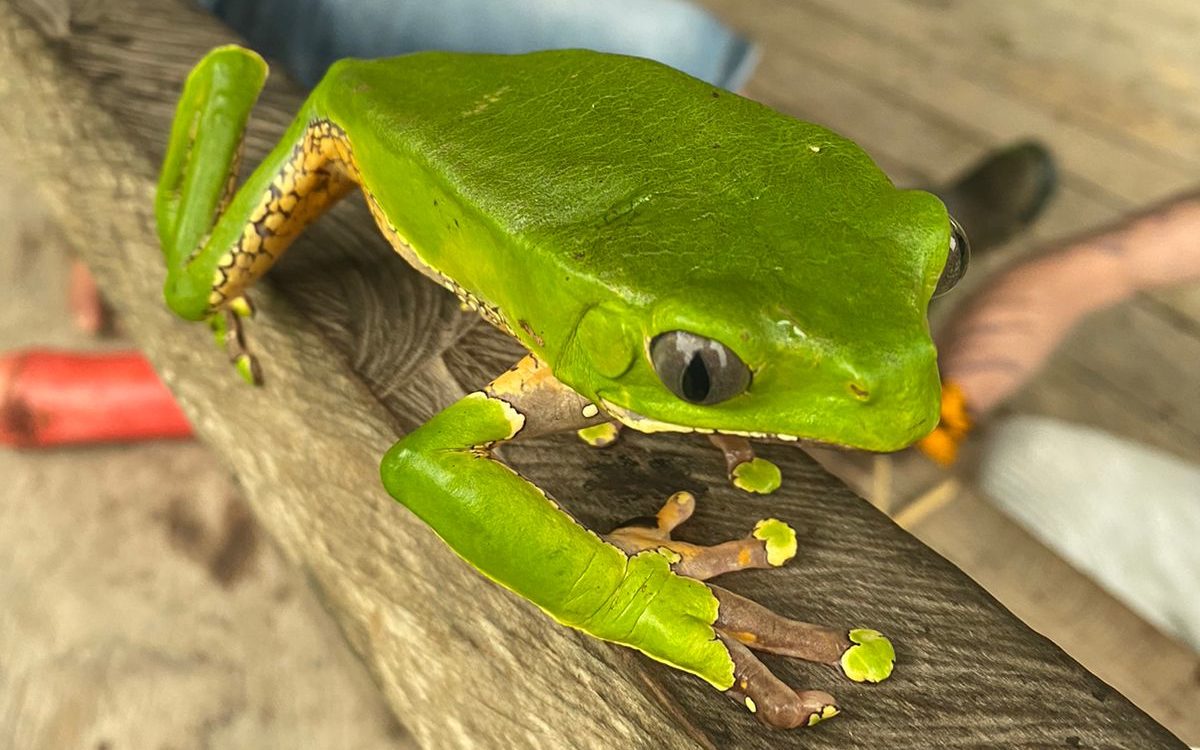
Phyllomedusa bicolor is a friendly and nocturnal tree frog that lives high in the trees of the Peruvian and Brazilian Amazon rainforests. Males grow to 91 to 103mm, females to 111 to 119mm. The dorsum is dark green and the underbelly a light yellow-white or cream colour. Two large prominent glands extend from behind the eyes.

P. bicolor can be found throughout the Amazon rainforests of northern Bolivia, western and northern Brazil, southeastern Colombia, eastern Peru, southern and eastern Venezuela, and the Guianas. Among the many tribes who use this frog’s venom as medicine, the Panoan tribes call it Kambô or Kampo in their language.

Phyllomedusa bicolor in the wild

Phyllomedusa bicolor — the Amazon tree frog

A medicine, not a poison

The tribes fear that if the spirit of the frog were to become angry, they would face serious consequences. This reverence shapes every step of the harvesting and ceremony process.

Kambo has been found to contain various peptides which have been proven to strengthen the immune system. The peptide-rich venom also has anti-inflammatory and anti-microbial properties that kill viruses and pathogens in the body.

The Matses tribe traditionally utilised the secretions to increase stamina and endurance, strength and dexterity for hunting, as well as to bring good luck.
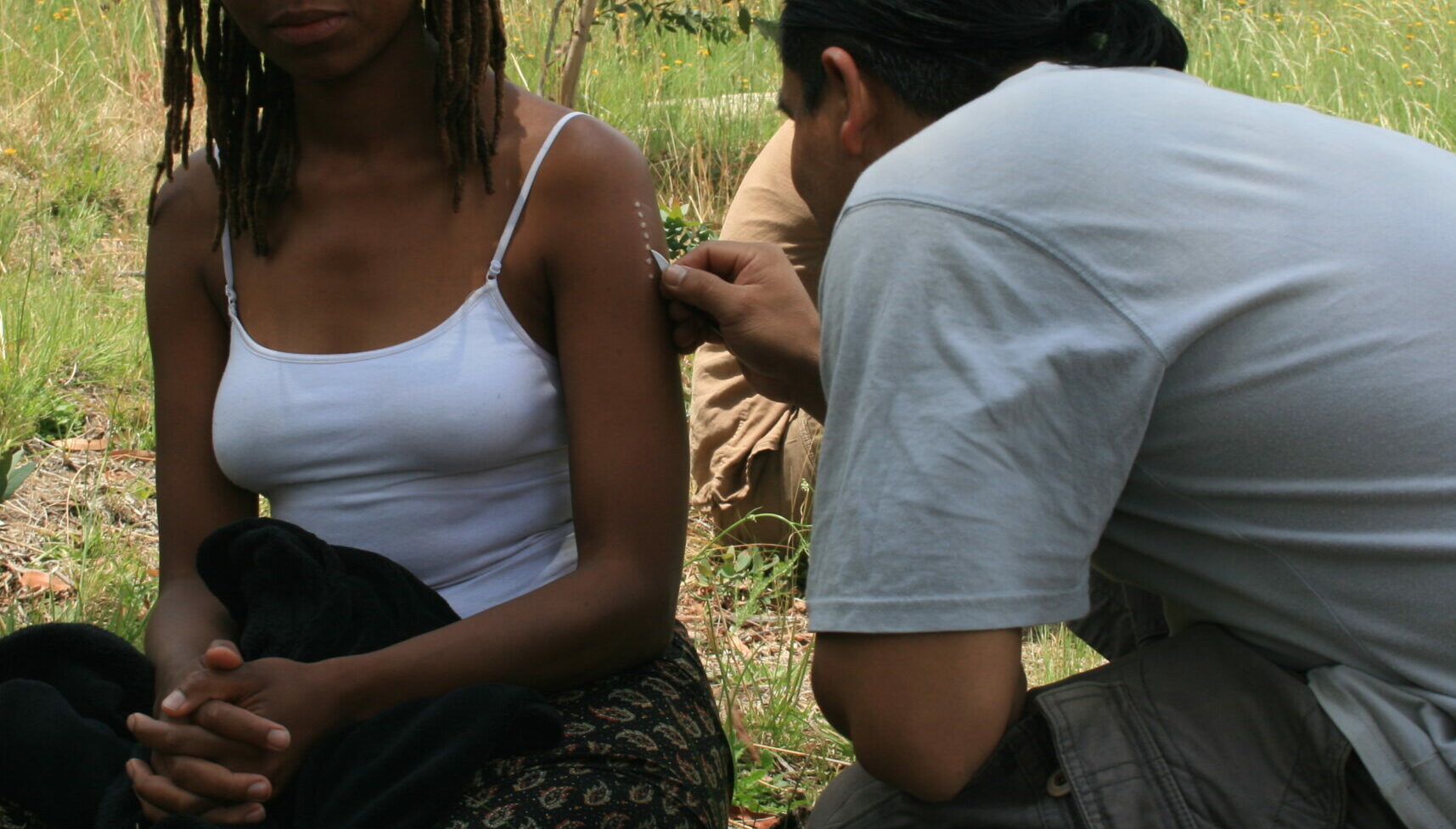
 
How the Venom is Harvested
 

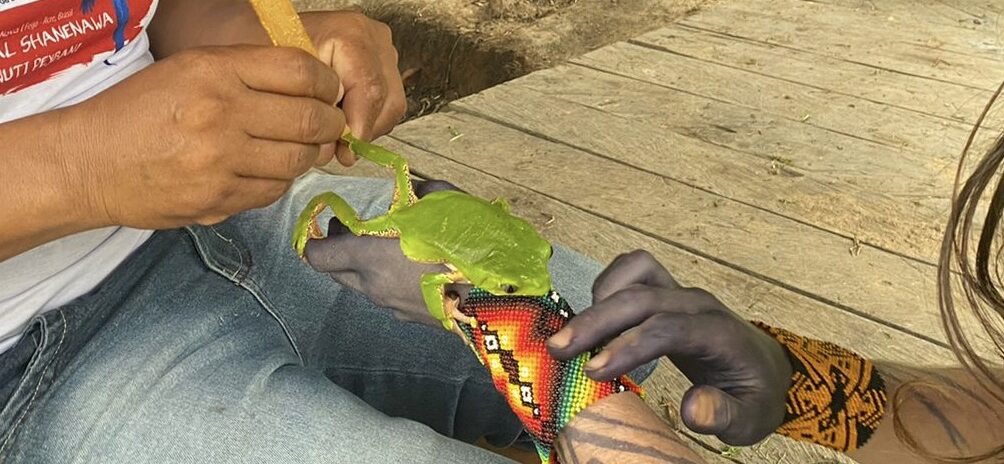
The harvesting process is conducted with great care and respect for the frog. No harm comes to the animal.

1

The frog is caught. As it has few if any predators, it is not afraid and is easy to handle.

2

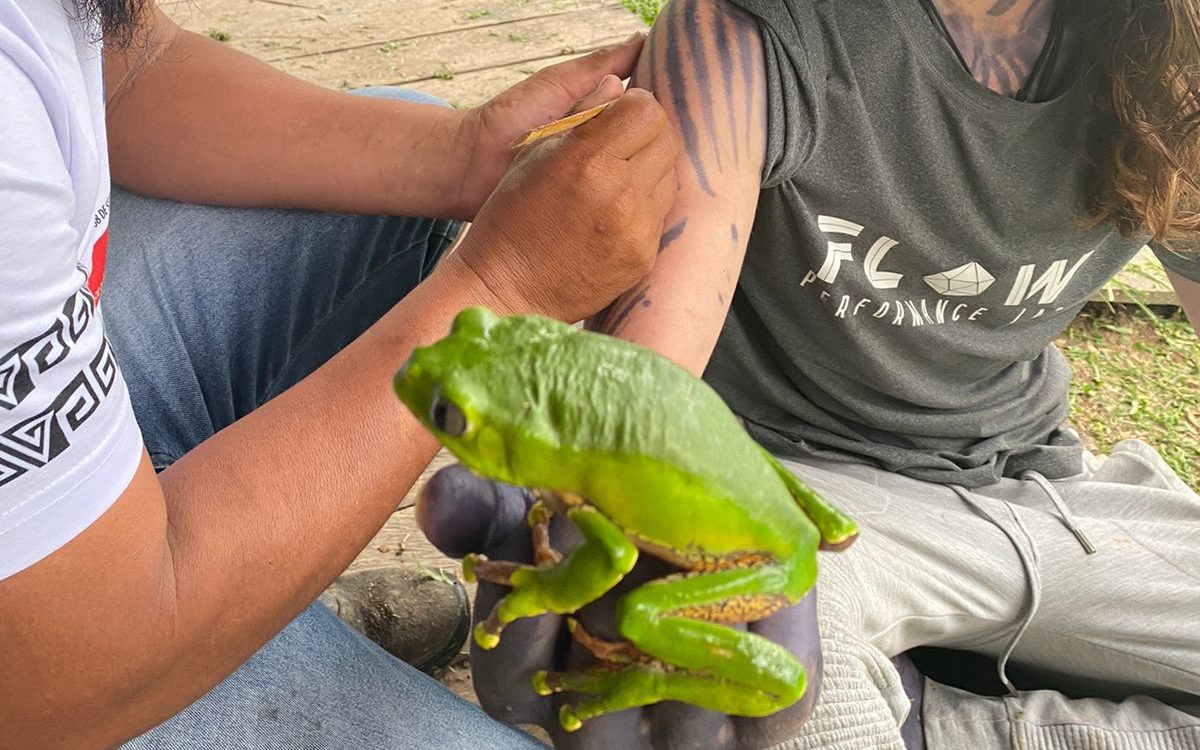
Very gently, the frog is tied up by its four legs and the glands are stimulated to secrete the venom.

3

The venom is gathered on a small stick from the Mulateiro tree and left to dry.

4

Once the venom has been gathered, the frog is carefully untied and released unharmed.

5

Once dry on the stick, the venom is carefully wrapped and protected until it is used in ceremony.

Kambo preparation

Preparation of the venom

Kambo application After Kambo

Application of the venom · Nixi after ceremony

Tribes that traditionally use Kambo
Matsés Yawanawa Shanenawa Kanamari Huni Kuin Katukina Kulina Yaminawa Marubo Ticuna
Why it works — the peptides

Kambo has been found to contain various peptides proven to strengthen the immune system. The peptide-rich venom has anti-inflammatory and anti-microbial properties that kill viruses and pathogens in the body. It is this combination of peptides, rather than any single compound, that makes Kambo uniquely powerful as a medicine.

Peter Gorman

For more information, the best resource comes from Peter Gorman — someone who has had more experience with this medicine than any other Westerner. His writings go deeper into the history, practice, and effects of Kambo than anywhere else.

Visit Peter Gorman’s site ↗
“The tribes fear that if the spirit of the frog were to become angry, they would face serious consequences. The frog is treated with the utmost respect.”
If this story moved you…

All writing on this site is free. If you found value here, a small contribution on Ko-fi helps keep this work alive.

Support on Ko-fi