Huachuma
Nixiwakas Songlines

Huachuma


The Plant

Considered the most ancient and revered plant teacher amongst the curanderos of northern Peru, Huachuma has been used ceremoniously for around 3,500 years.

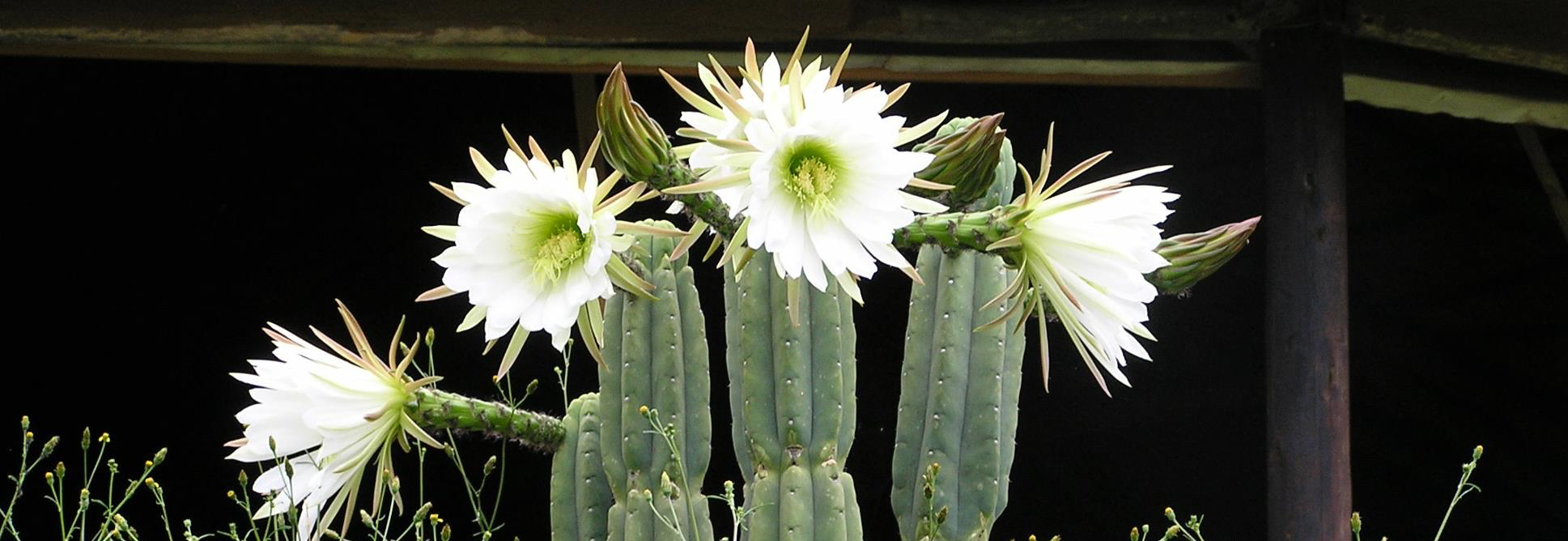
Huachuma is more commonly known as San Pedro in the Western world. Its scientific name is Echinopsis pachanoi. A tall, light green, night-blooming, nearly spineless columnar cactus native to the Andes Mountains, it grows at altitudes of 6,600 to 9,800 feet and is found across Colombia, Ecuador, Peru, Bolivia, Chile, and Argentina.

The earliest known use comes from a stone carving dating back to around 1300 BC, found at the Jaguar Temple at Chavín de Huántar in northern Peru. It very clearly depicts a huachuma shaman holding a tall San Pedro cactus.

San Pedro in flower

San Pedro in full flower — Sunmoon Lodge, Rustlers Valley

The Ceremony
A ceremony rooted in thousands of years

San Pedro ceremonies typically take place at night, usually in front of a mesa — an altar adorned with sacred objects such as shells, feathers, ceramics, or images of saints that hold significance to the shaman or patient. Sacred tools such as incense and musical instruments are also used.

Currently in Peru, both the shaman and the patient ingest the San Pedro elixir after fasting for 24 hours. The shaman and patient may be accompanied by others as support. These other people are not necessarily shamans or patients but drink the elixir to strengthen the ritual.

The San Pedro ceremonies remained unadulterated for upwards of a thousand years. It was only after the Spanish conquest that the huachuma cactus took on the name “San Pedro” — Saint Peter, the Christian saint said to hold the keys to Heaven’s gates. The renaming is a clear indicator that the Spanish colonists were aware of the plant’s ability to take one into the sacred realms.

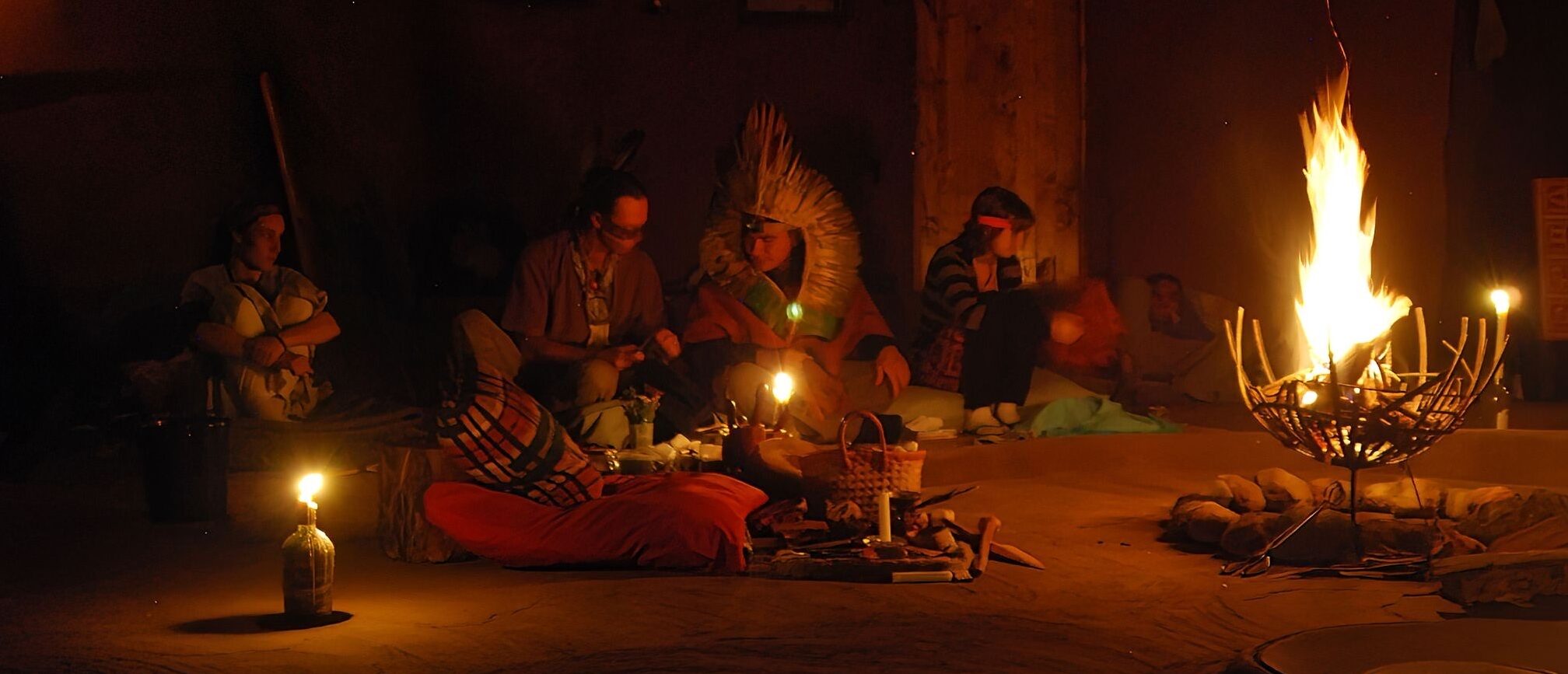
Ceremony at Rustlers Valley

Ceremony at Rustlers Valley, South Africa

Effects & Alkaloids
The Experience

Mescaline is the main psychoactive component. The experience lasts around 8 to 14 hours in total and is often described as very physically stimulating — centred in the body rather than the mind. A euphoric warm glow moves through the body, which can sometimes alternate with waves of nausea or an electric tingling.

The cognitive experience can be similar to other natural psychedelics — deeply introspective, sometimes challenging, and intense. Huachuma is generally described as the gentler of the two mescaline-containing plants, though its effects last slightly longer than peyote, which typically lasts 10 to 12 hours.

San Pedro is one of the safest psychoactive plants in existence. There is no week-long dieta to follow — just a few days of cutting out fatty foods, meat, and alcohol beforehand. Thousands of years of shamanic use and no reported deaths linked to San Pedro speaks for itself.

Alkaloids present in E. pachanoi
Mescaline (25+ mg per 100g fresh)
3,4-Dimethoxyphenethylamine
3-Hydroxy-4,5-dimethoxyphenethylamine
3-Methoxytyramine
4-Hydroxy-3,5-dimethoxyphenethylamine
Anhalonidine
Hordenine
Tyramine
Risks & Considerations
Generally safe
A long safety record

Toxicity to mescaline has not been sufficiently studied, but thousands of years of shamanic use and no reported deaths linked to San Pedro speaks volumes. It is not as demanding as ayahuasca — no extended dieta is required.

Caution
Beware of additives

The brew can become dangerous if brewed with additives by an inexperienced practitioner. Traditional additives like toé or angel’s trumpet (datura) can be fatal if used in excess. Avoid ceremonies involving toé unless the shaman has years of verified experience.

Ceremony fire

“The key with this and all other entheogens is respect. A healthy respect for the plant teacher goes a long way.”

“I had planted over a thousand San Pedro plants around my home and along the slopes of the mountain. I trust that they have benefited many people since I departed.”