The origin of ayahuasca use is still unknown, and different theories have been proposed. While some authors suggest its use dates back 5,000 years, no archaeological remains have been found to support this. Unlike other psychoactive substances such as psilocybin mushrooms, datura, and peyote, no references to ayahuasca exist in earlier accounts of colonisers and missionaries who extensively travelled the Amazon basin.
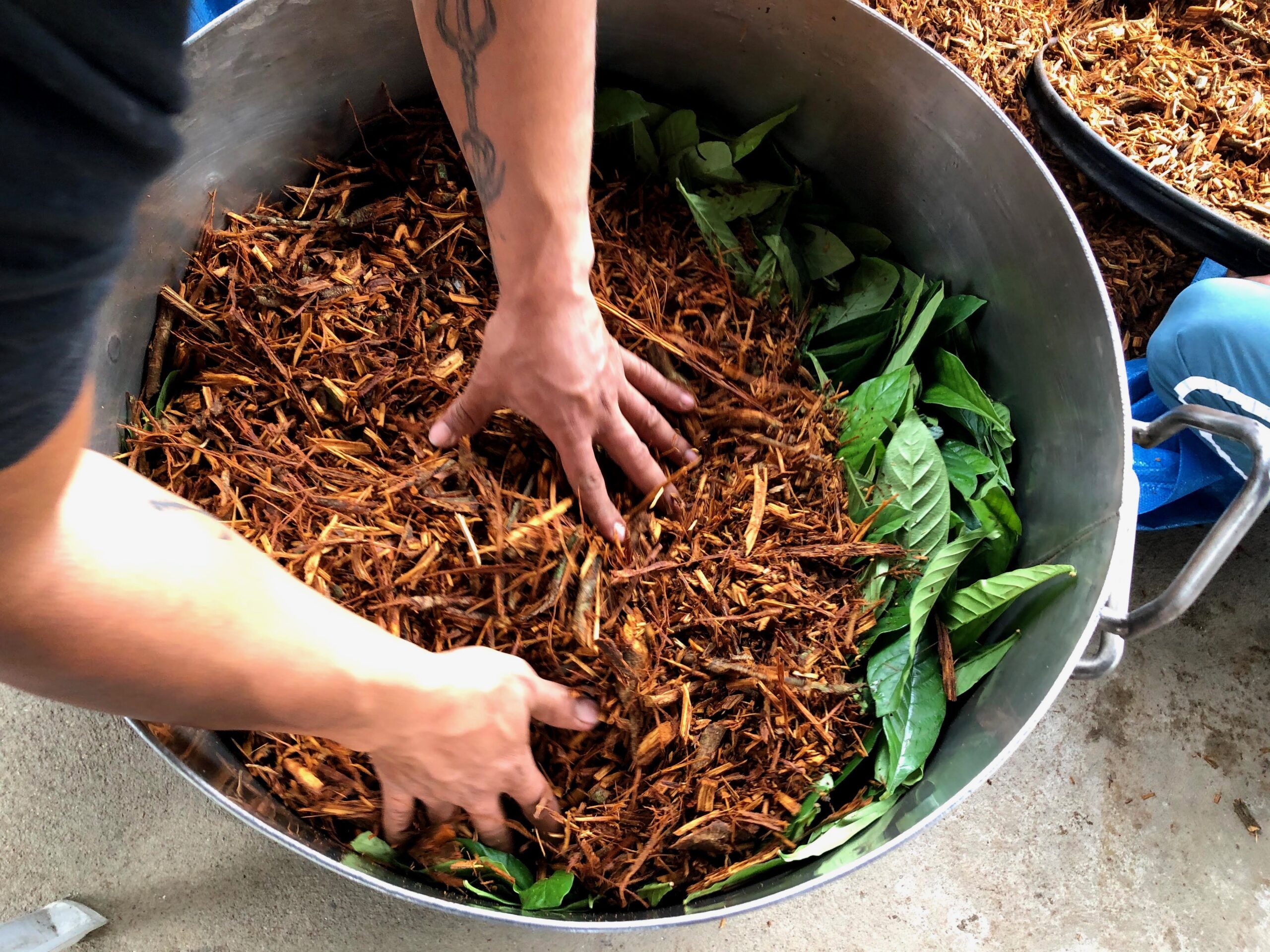
It is reasonable to assume that the use of B. caapi predated its use in combination with P. viridis, and that curanderos used it initially as a purgative. It is also possible that different indigenous groups added various plants to the decoction, and it was through experimentation that someone discovered the powerful effects of combining the vine with chacruna.
The Quechua name gives a sense of how the medicine was understood: “aya” meaning “corpse, dead, dead human body” and “waskha” meaning “rope, cord, braided or twisted wire.” Not as something to be feared, but as a bridge — a way of travelling beyond the ordinary boundaries of the living world.