Springs, South Africa · 1970s
I was born in 1963 and grew up in a Christian household in South Africa during the 1960s and 70s. It wasn’t a particularly religious household in the traditional sense. My parents never attended church, except for weddings and the occasional special event. But I was sent to Sunday school, and for twelve years of my life I attended a Christian school taught by the Brothers, members of a Christian teaching order who wore long black robes and carried themselves with quiet authority. Religion was present in my life, woven into the fabric of my schooling and the culture around me, but it never truly took root in me as a personal faith. I absorbed it, respected it, and moved on.
Then, when I was around sixteen years old, something happened that would prove far more lasting. My father, trying to find a way through some difficulties our family was experiencing at the time, took us all to a school of meditation where a guru taught each of us individually how to enter a deep meditative state through transcendental meditation. I remember sitting with the guru while he chanted and rang bells around me and gave me a personal mantra to work with. The moment I began to chant that mantra quietly within myself, I went somewhere else entirely. It was not sleep, and it was not daydreaming. It was another world, clear and still and luminous, and I have never forgotten it. For a while after that I practiced daily and could return to that place reliably. But I was sixteen, and life was full of other things, and gradually the practice faded and I let it go.
I tell you this because it matters to what comes later. I am not a religious person. I do not follow any tradition or doctrine. I have never positioned myself as someone with special access to other realms. What has come to me in visions has come uninvited, and I have simply tried to be honest about it. This is one of those stories.
Who is Ganesha
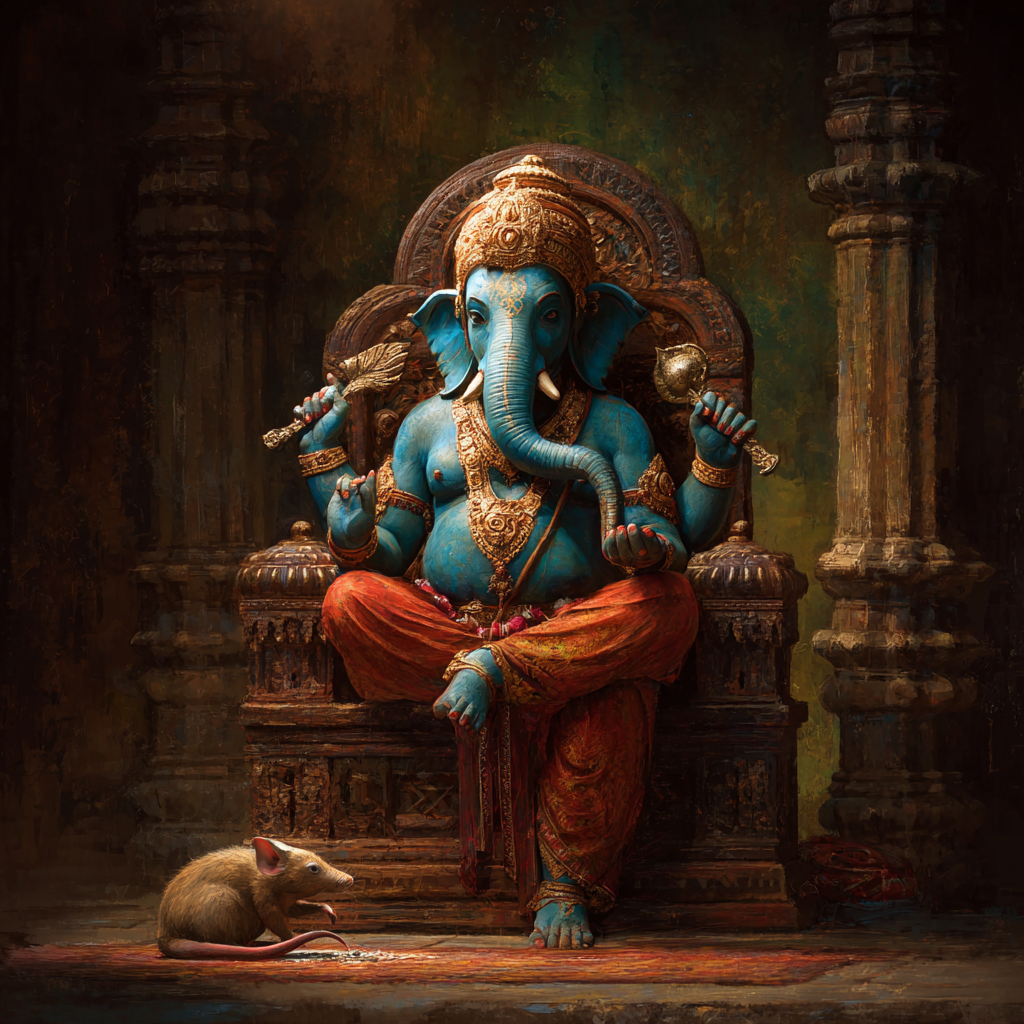
Ganesha, also known as Ganapati, is one of the most widely recognized and beloved deities in the Hindu tradition. He is depicted as a rotund, benevolent figure with the head of an elephant and the body of a human, typically shown with four arms and often seated or standing in a posture of calm authority. He is the son of Shiva and Parvati, two of the most central figures in the Hindu pantheon, and his image is found in homes, temples, businesses and roadside shrines across India and wherever Hindu culture has taken root around the world. Ganesha is known as the remover of obstacles and the lord of beginnings, which is why his blessing is traditionally invoked at the start of any significant undertaking, whether a journey, a business venture, a marriage, or a creative work. He is also associated with wisdom, intellect and the arts, and is considered the patron of writers and scholars. His vehicle, or vahana, is the humble mouse. Though he belongs to a specific religious tradition, Ganesha has a way of reaching across boundaries, and his image is encountered today far beyond the Hindu world, in yoga studios, art galleries, meditation spaces and the homes of spiritual seekers of many different backgrounds and none.

The Marimba House · Rustlers Valley
By the time I was in my mid thirties I had been living for several years at Rustlers Valley in the eastern Free State, a place nestled in the cold foothills of the Maluti Mountains that had become one of South Africa’s most remarkable alternative communities and a legendary gathering place for musicians, artists, healers and seekers of all kinds. I had built a round house there specifically designed for drumming workshops and musical gatherings, with a central fireplace that made it warm and welcoming even in the deep cold of the mountain winters. It was a good space, a living space, a space that breathed with ceremony and music and the particular kind of conversation that happens when people gather around a fire in the mountains far from the noise of ordinary life.
It was into this world that Dr Luis Eduardo Luna first came from South America in 1997. Luna is one of the world’s foremost authorities on ayahuasca. A Colombian born anthropologist and scholar, he had spent decades living and working among the indigenous plant medicine traditions of the Amazon basin, publishing groundbreaking research, and eventually founding Wasiwaska, a research centre in Brazil dedicated to the study of visionary plants and consciousness. When he came to bring ayahuasca ceremonies to South Africa for the first time, Rustlers Valley was the natural home for it. And my round house, with its central fire and its mountain warmth, was the natural space.
I became the firekeeper.
The Night of the Ceremony Around the Fire
In the world of ayahuasca ceremony, the firekeeper holds a particular and often invisible responsibility. While everyone else in the room is lying down, surrendering to the medicine, the firekeeper stays present. He tends the fire, maintains the warmth and safety of the space, watches over the people in his care, and does all of this while always drinking the medicine himself, because the medicine is precisely what guides him through the work. In these ceremonies there are no spectators. Everyone in the room drinks. That is the agreement and the commitment. I had taken on that role from the very first ceremony we held at Rustlers Valley, simply because someone had to do it and I was the one who knew the space. It became mine, and I carried it with a sense of pride and purpose.

But on this particular night, perhaps our fifth ceremony weekend together, I had asked if I could be relieved of that duty for once. I wanted to lie down like everyone else. I wanted to surrender fully to the medicine, to listen to the music without the weight of responsibility on my shoulders. A gentleman in our group offered to take over the fire for the evening, and I gratefully accepted.
I settled into my place, drank the medicine, and let myself go.
But as the ceremony deepened and the medicine moved through the room, I became aware that something was wrong. The fire was dying. The room was filling with smoke. The man who had offered to tend the fire was nowhere near it. I lay there for a while, hoping he would notice, hoping he would return to his post. But he did not. And eventually I understood that I had no choice. I got up quietly, moved through the dim room past the bodies of people deep in their journeys, and sat down beside the fire. I began to coax it back, feeding it carefully, adjusting the airflow, clearing the smoke, bringing the room back into balance.
And sitting there, doing the work I had always done, I felt something I had not expected to feel. Inside, I felt a deep and heavy sadness. I had tried so hard to step back, to trust someone else, to give myself one night of rest and surrender. And it had not worked. I was back at the fire, alone with my duty, while the medicine moved through me and everyone else traveled freely through other worlds. I felt, in that moment, genuinely let down.

Rustlers Valley · Early 2000s
It was in that moment that I became aware of something unusual happening in the room. A man among the participants had brought a harmonium, and he was singing. Not the Amazonian icaros that usually filled the space, but Hindu devotional chants, a Shiva mantra, strong and clear and ancient, his voice carrying that particular quality that a powerful mantra has when it is sung with full intention in an enclosed space. The sound of that mantra and the warmth of the returning fire were the two things I was most aware of in that moment.
And then Ganesha appeared.
He was there in front of me, directly in front of me, levitating a few inches above the earthen floor, legs folded beneath him in the lotus position, slightly larger than a full grown man. He was blue faced, with the great elephant head that I would later come to recognize from countless images and tapestries. Four arms, adorned in gold jewelry and richly colored silk and cloth of extraordinary beauty. His eyes were very large, very alive, and they were looking directly into mine.
I did not know who he was. That is important to understand. I had no framework for what I was seeing. I had not been reading about Hindu deities. I had not been seeking Ganesha or any other being. He simply appeared, as fully real and present as any person who has ever sat across from me in a room, and he looked at me with an expression I can only describe as pure compassion.
And I began to weep.
It was as if my body simply opened. Water poured from my eyes in streams, drenching my shirt, running down my face, unstoppable and utterly without drama. It was the physical response to something I had no words for then and struggle to find words for even now. It was the feeling of being completely seen. And of being met there simply with love. An immense, impersonal, boundless love that had nothing to do with anything I had done or not done, and everything to do with what I was.
No words passed between us that I can recall. There was no message, no directive, no vision within the vision. There was simply his presence and my response to it, and then, as these things do, it passed.
On the same night, in the same room, a woman who had grown up in a Christian family and had spent years actively rejecting that tradition had her own encounter. Jesus Christ appeared to her. She was not looking for him either. And yet there he was.
Two beings from two entirely different traditions, appearing on the same night, in the same cold mountain room, to two people who had not invited them and were not expecting them. I have thought about that many times over the years. I still think about it.
The Questions That Followed

The altar at Rustlers Valley
In the days and weeks after that night I began to ask questions that I had never asked before, and I found very quickly that almost nobody had satisfactory answers. I had seen Ganesha. I had been with him, in the same way you are with a person sitting across from you in a room. The clarity of it has never faded. I can close my eyes today and see exactly how he looked, exactly how he was positioned in that space, exactly what I felt in the moment his eyes met mine.
So I had questions. Who was he? Why had he come to me, a man with no connection to the Hindu tradition? Did I now have some kind of obligation to him? Was I supposed to worship him, follow a practice, change something about the way I lived? And perhaps most pressingly, what does it mean to see a spiritual deity if you are not a religious person?
I asked these questions to everyone I met who seemed spiritually inclined. And I found, with a kind of gentle surprise, that no one really had anything useful to say. They had frameworks, they had doctrines, they had interpretations, but none of it quite touched what I was actually asking.
Then one day in Johannesburg I met a guru, and I put the question to him directly. I told him what I had seen, and I asked him what I should do with it.
He looked at me and said, simply, why do you want to hold on to it?
That was all. No elaboration, no teaching, no system. Just that one quiet question turned back toward me. And something in me shifted. The grasping eased. The need to explain it or categorize it or know what it meant began to loosen its grip.
What I came to understand, slowly and in my own way, was this. I did not experience Ganesha as a religious figure. I did not encounter him as a Hindu, or approach him as a Christian, or frame him within any tradition at all. I simply saw him and was with him. The tradition came later, when I went looking for who he was. The experience itself was prior to all of that, innocent of it, free of it.
And then I arrived at something that felt true to me, something I have held ever since. Ganesha exists. I know this because I was with him. But I have come to understand that the reason beings like Ganesha exist, the reason they have such vivid and undeniable presence in the world, is because of the immense ocean of human love and devotion that has been poured toward them across centuries and millennia. Millions of people in thousands of temples, every single day, offering flowers and prayers and tears and music and the full force of their longing toward this being. And I have come to understand that love, concentrated and sustained across that much time and that many human hearts, actually calls the deity into being. It creates him, sustains him, gives him form and presence and the capacity to appear in a cold mountain room in the Free State to a firekeeper who had never once thought about him.
I think the same is true of Christ. And of Allah. And of every other being that has received the sustained devotion of millions of human souls. The love is not wasted. It lands somewhere. It builds something. And what it builds is real.
 One night, some time after all of this, I found myself in conversation with Shiva. I had one question for him. I asked him what religion he was. He laughed. Not a polite laugh or a gentle laugh. He laughed and laughed and laughed, the way someone laughs when the question itself is the funniest thing they have ever heard.
I took that as my answer.
After that I placed a statue of Ganesha on my altar and hung a beautiful tapestry of him in my round house. I did not pray to him in any formal sense. It was more that I wanted to acknowledge his presence, to say quietly, I know you are here, even when I cannot see you, and I honor that. He sat on my altar for years, patient and unchanging, the remover of obstacles, present in the room whether or not anyone was paying attention.
The Road to Rishikesh

The Ganges · Rishikesh, India
Several years after the night of the fire, perhaps six or seven years, a man named Arun came to Rustlers Valley to participate in an ayahuasca ceremony. He was an Indian businessman, and the medicine moved through him with such beauty and force that he went back and gathered his entire family and brought them all to the next ceremony. Afterwards, on the Sunday morning, I invited him up to my house for coffee.
He walked in and stopped. His eyes went immediately to the Ganesha tapestry on the wall, to the statue on the altar, to the various images and objects I had gathered around me over the years. He was lit up by it. He asked me question after question, how did I know Ganesha, what did Ganesha mean to me, why did a man like me have all of this in his home. And I told him the story.
By the end of the morning we were friends in the way that sometimes happens between people, quickly and completely.
Before he left he said to me, I sometimes travel to India on business. One day when I go to the Ganges, I will call you and we will go together. I thanked him warmly and held it lightly. I had heard beautiful offers like that before, generous impulses spoken in the glow of a good morning, and I had learned not to attach to them.
But six or seven years later, my phone rang. It was Arun. He was going to Rishikesh. He wanted me to come. And when I told him I could not afford the ticket he said simply, you will be my guest, all expenses covered, one week, the holy city on the Ganges. Come.
I said yes.
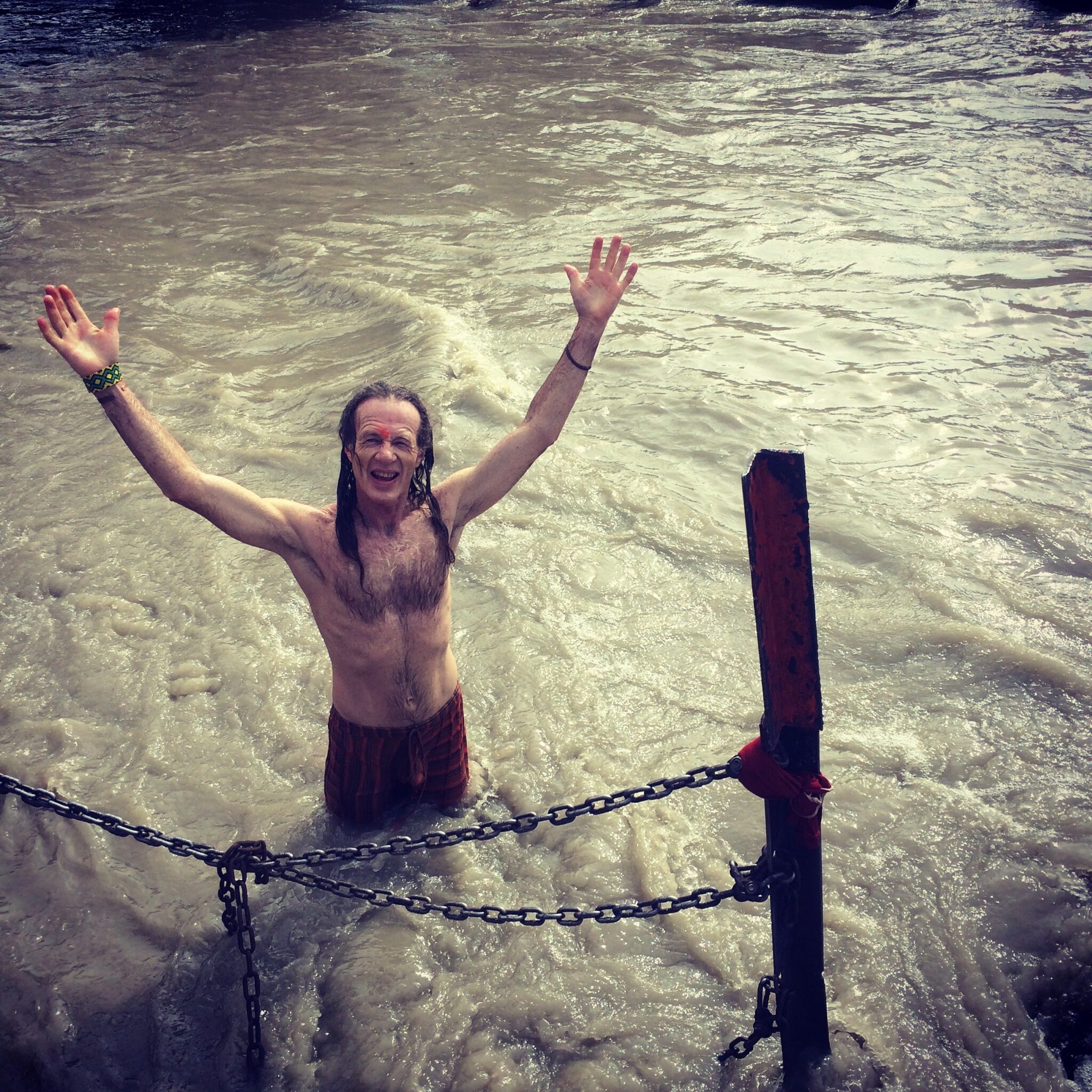

Delhi Airport Terminal 3 · The gathering
I flew to Delhi alone, arriving several hours before Arun’s connecting flight, which gave me six hours to wait in the airport. I found one of those distinctive reclining lounger chairs and settled in. The man next to me, curious in the way that Indians often are with strangers, asked me what had brought me to India.
Without hesitating, without thinking about it, I heard myself say, I came to visit Ganapati.
The man’s eyes went wide. You know Ganapati? And so I told him the story, the same story I have just told you, the cold mountain room, the fire, the sadness, the levitating blue faced elephant headed being with the big eyes and the gold jewelry and the silk, the tears that would not stop. And as I talked, something happened around me. The man called to a friend. The friend called to another. And within a few minutes I had twelve or thirteen Indian businessmen sitting around me on the carpet of Delhi Airport, completely still, listening.
I want you to imagine that scene for a moment. A South African man reclining on an airport lounger in Delhi Terminal 3 telling a group of Indian businessmen about the night Ganesha came to visit him in the mountains of the Free State. And those men, who had grown up with Ganesha, who had poured their own love and devotion toward him their entire lives, leaning in with open faces, hanging on every word.
When I finished, one of them looked at me and said, you know, there are not many people even in India who have had what you experienced. You are very lucky.
They shook my hand, one by one, and sent me on my way.

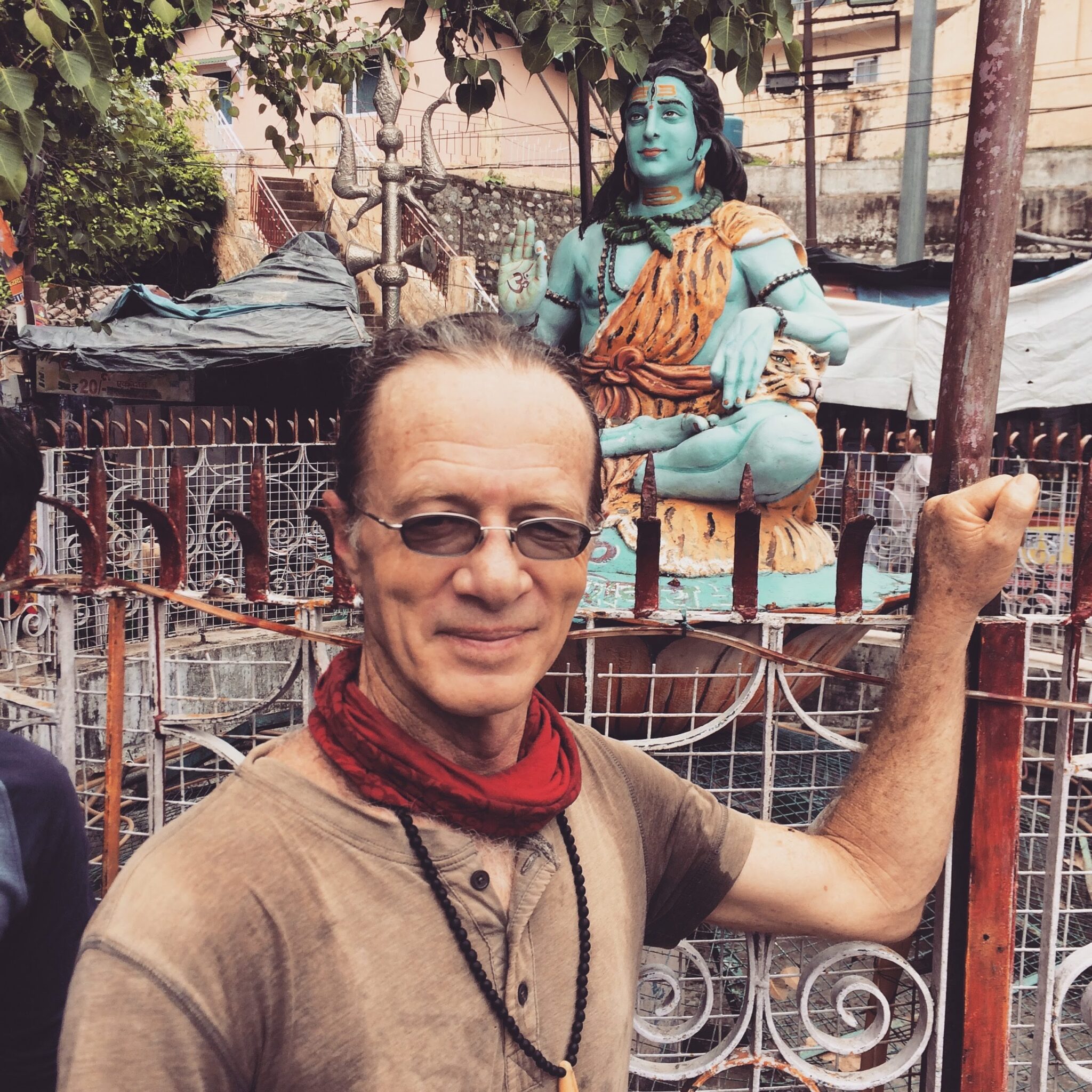
I carried that with me into Rishikesh, the city where the Ganges comes rushing cold and green out of the Himalayas, one of the most sacred places on earth. Arun was the perfect guide, a man with a Buddha face, round and gentle and full of quiet humor, who knew the city and its temples and its rhythms intimately. We visited temples, walked the ghats along the river, rode a motorcycle up into the mountains above the city, and fell off it, both of us bleeding on the road, laughing, not seriously hurt but scratched and a little humbled.
I did not have another vision of Ganesha in Rishikesh. I did not need one.
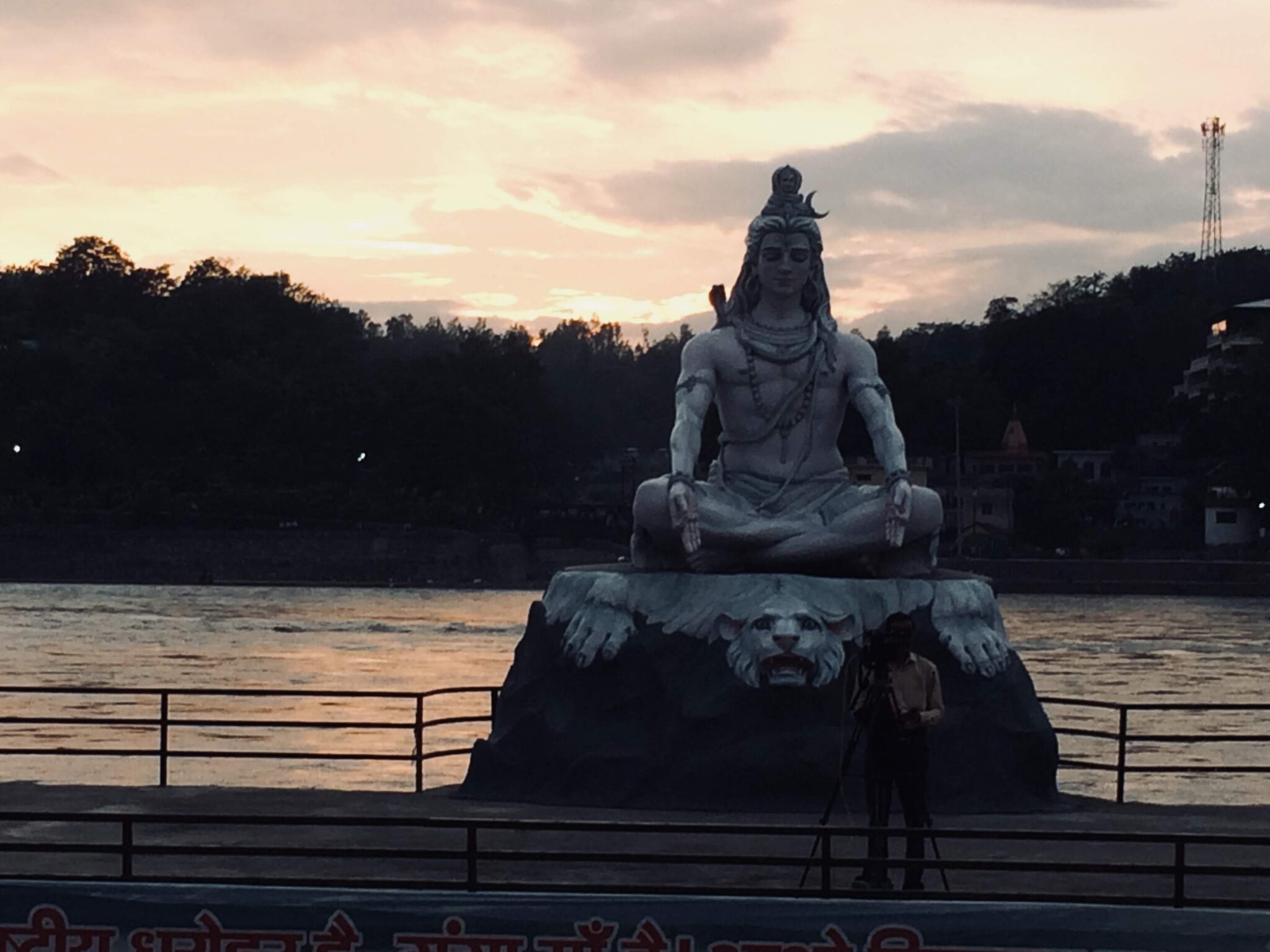
A South African boy raised in a Christian school, touched briefly by a guru’s mantra at sixteen, spending twenty years in the mountains learning to tend fire, visited one cold night by an elephant headed deity he had never heard of, and years later sitting on the banks of the Ganges in the city where that deity’s father is said to walk the earth.
I still don’t know what religion I am. But I know what I have seen.Writing these stories takes time. If they mean something to you, you can support my writing here.