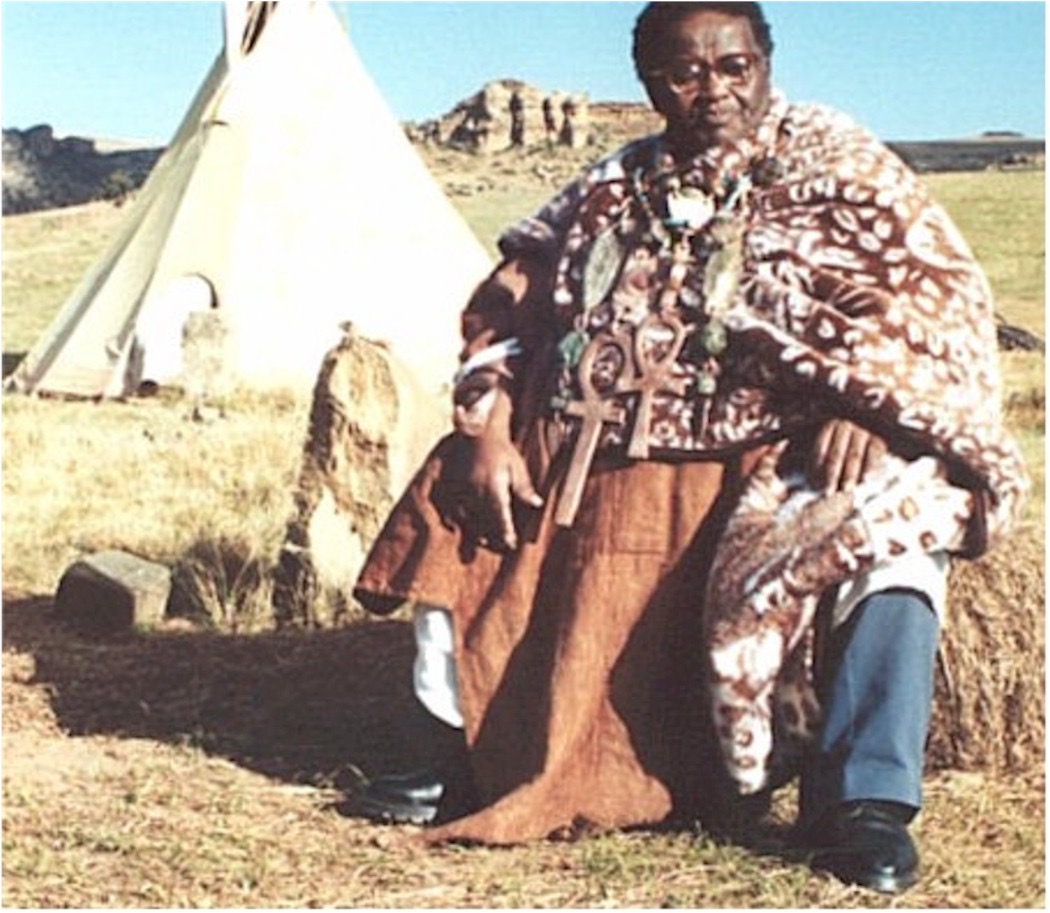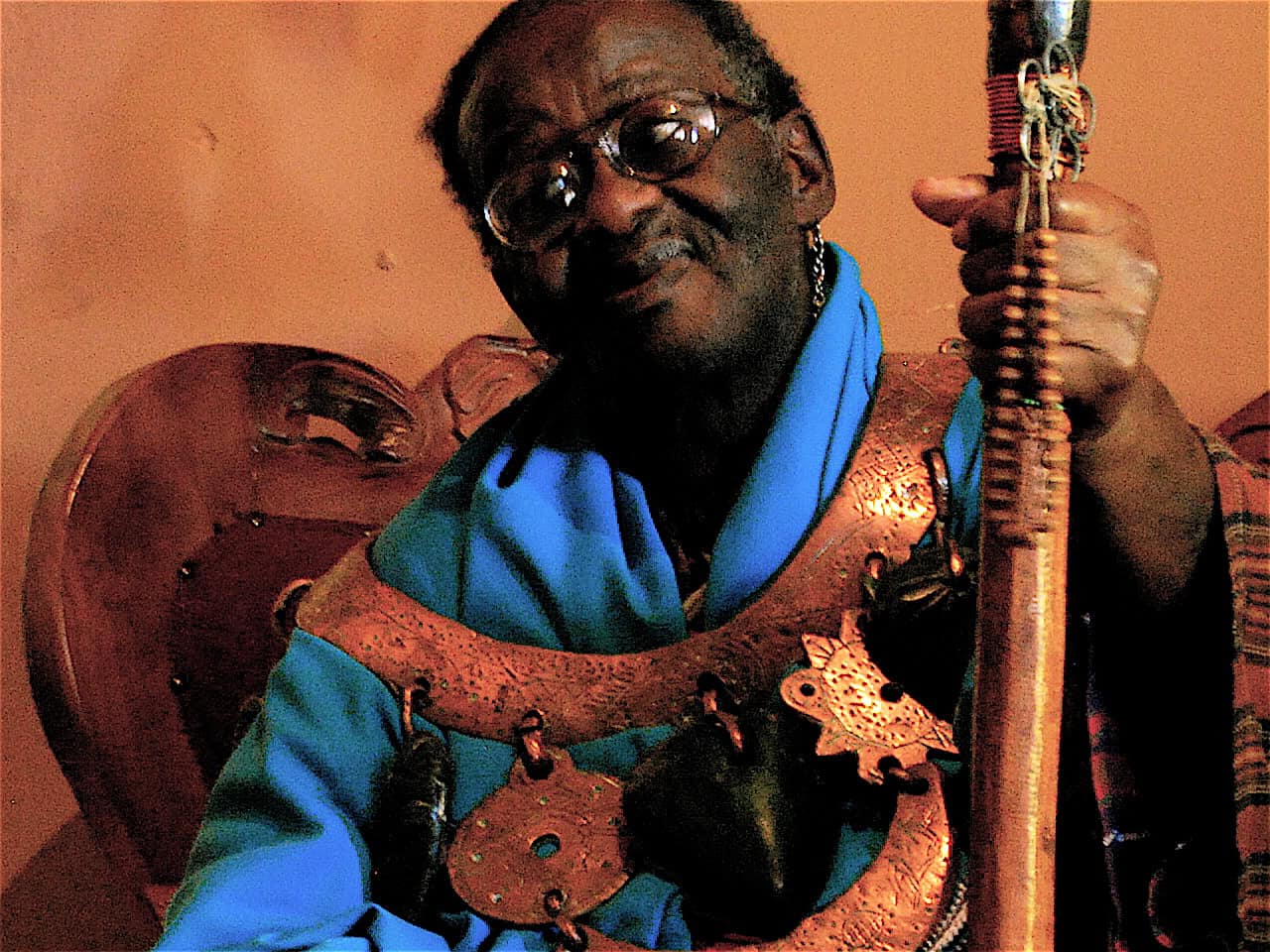
He was, without question, the most powerful person I have ever encountered, a man whose presence carried the weight of ancestors, the wisdom of stars, and the heartbeat of Mother Earth herself.
In the tapestry of my Journey of Asazi, few threads shine as brightly as my friendship with Baba Credo Vusamazulu Mutwa, the great Zulu sangoma, storyteller, and guardian of ancient African knowledge. Our paths crossed in South Africa during a time when I was deepening my own calling as a sangoma in the Thokoza clan, initiated under Gogo Dlamini Nomzamani from Zululand. Baba Credo’s teachings resonated like a drumbeat in my soul, affirming the experiential knowing that forms the core of shamanism: not blind faith, but direct cooperation with spirit for healing and harmony.
Our first meeting was in 1997, in Blairgowrie, Johannesburg. I had read his profound book Indaba, My Children, a treasury of Zulu myths, philosophies, and oral histories that spoke directly to my soul. I sought him out simply to meet him, without requests or expectations. When he asked why I wanted to see him, I told him: “I read your book Baba, and I wanted to meet you.” He nodded, and without pause, began to share a story that has stayed with me ever since.
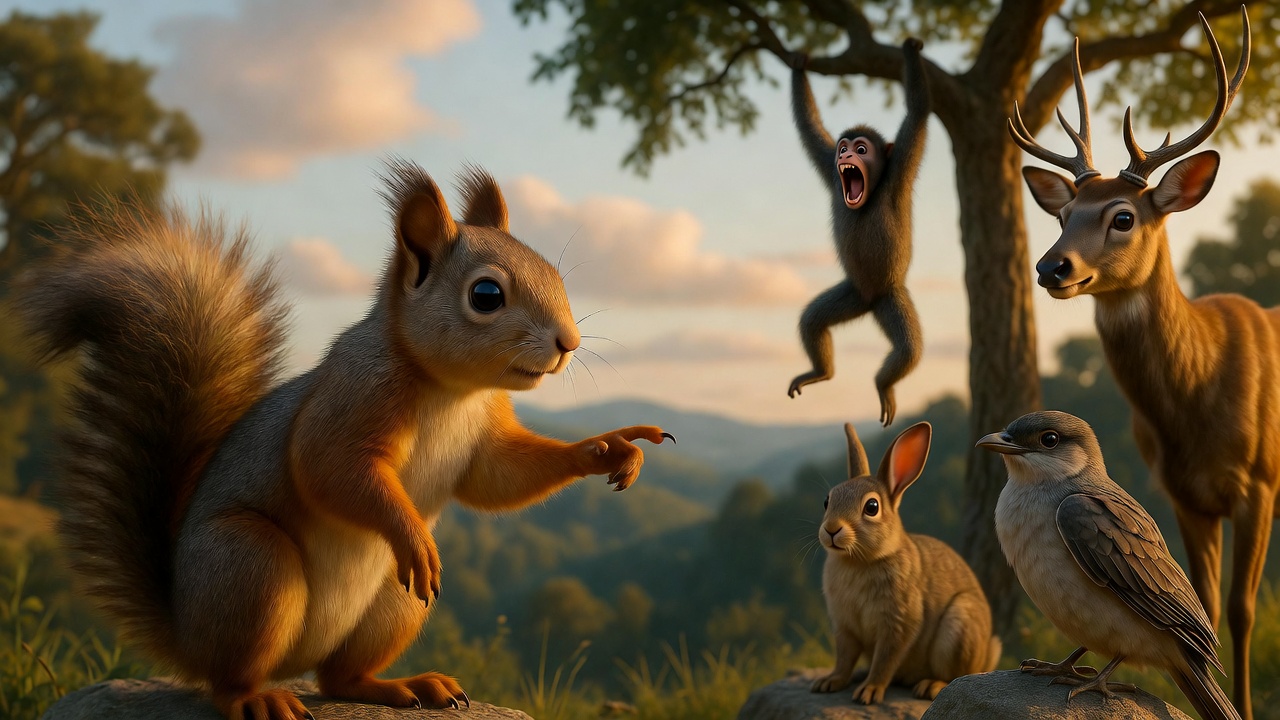
The valley where the animals lived in harmony
It was a tale of a lush valley in Africa, where many animals lived in harmony. Then one day, a terrifying sound began to echo from the forest. The sound was a roar that shook the ground and filled the air with dread. This sound returned every day, and the animals whispered in awe that a mighty, powerful creature must dwell up there in the forest.
For years, they stayed in the valleys, never daring to venture near, convinced that entering the forest meant certain death. In reverence, they built an altar at the forest’s edge and left offerings of food for what they now worshipped as a powerful god. Each morning, the food was gone, confirming their fears and faith.
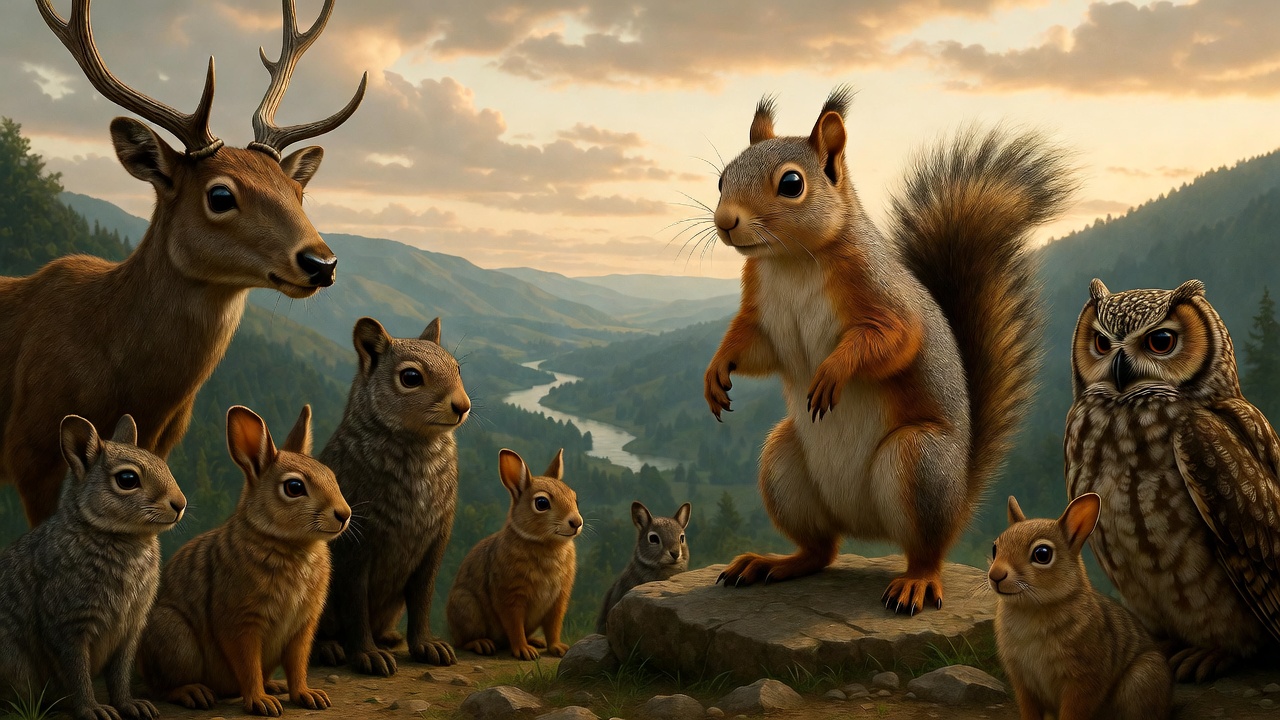
The squirrel returns unharmed
But one day, a little squirrel grew curious and bold. He decided to climb into the forest to see this god for himself. A great meeting was held, all the animals gathering, wishing him well through tears, certain he would never return. Yet, two days later, the squirrel scampered back, unharmed, gathering nuts as if nothing had happened.
The animals rushed to him: “What did you see? How did you escape death?” The squirrel agreed to tell his tale. The elders called everyone to the gathering place. They looked at the little squirrel and said, “Tell us what you saw.” With a simple shrug, he replied: “It’s just a monkey.” A parable that cut through illusions of fear and power, revealing how assumptions can build gods out of shadows.
Over the years, our friendship deepened. He always addressed me with respect as “Sir” or “Mr Niyan,” the name I carried for 13 years after my first sweat lodge, and each visit he would ask, “What do you want from me this time?” I always replied the same: “Nothing Baba, I just came to hear you talk.” He appreciated that deeply, confiding that everyone else always wanted something from him. But with me, he could simply share, and he did, telling hundreds of stories I could never repeat in full.
His voice wove visions of creation myths, prophecies of humanity’s return to balance, and the sacred “mother mind” of compassion that must awaken to heal our world.