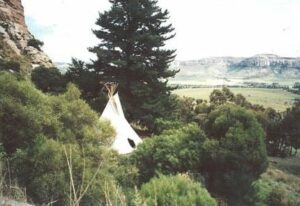
Of all the medicine people I have met, none amazed me more with his knowledge than Baba Credo Vusamazulu Mutwa.
I first read his book Indaba, My Children in 1995. It is a treasury of Zulu myths, philosophies and oral histories, and it spoke directly to my soul. These stories take their name from it. The Journey to Asazi is a chapter of that book: the journey to “we know not where”. A people leave a destitute village of famine and disease and move south, searching for peace, health and happiness.
A friend who had come to a festival at Rustlers Valley, a psychology student, had a connection to Baba Credo and his phone number. I simply phoned him and asked if I could come and see him, and he said yes.
Our first meeting was in 1997, in the small house where he lived in Blairgowrie, a suburb of Johannesburg. I sought him out simply to meet him, without requests or expectations. When he asked why I wanted to see him, I told him, “I read your book Baba, and I wanted to meet you.” He nodded, and without pause began to tell me a story.
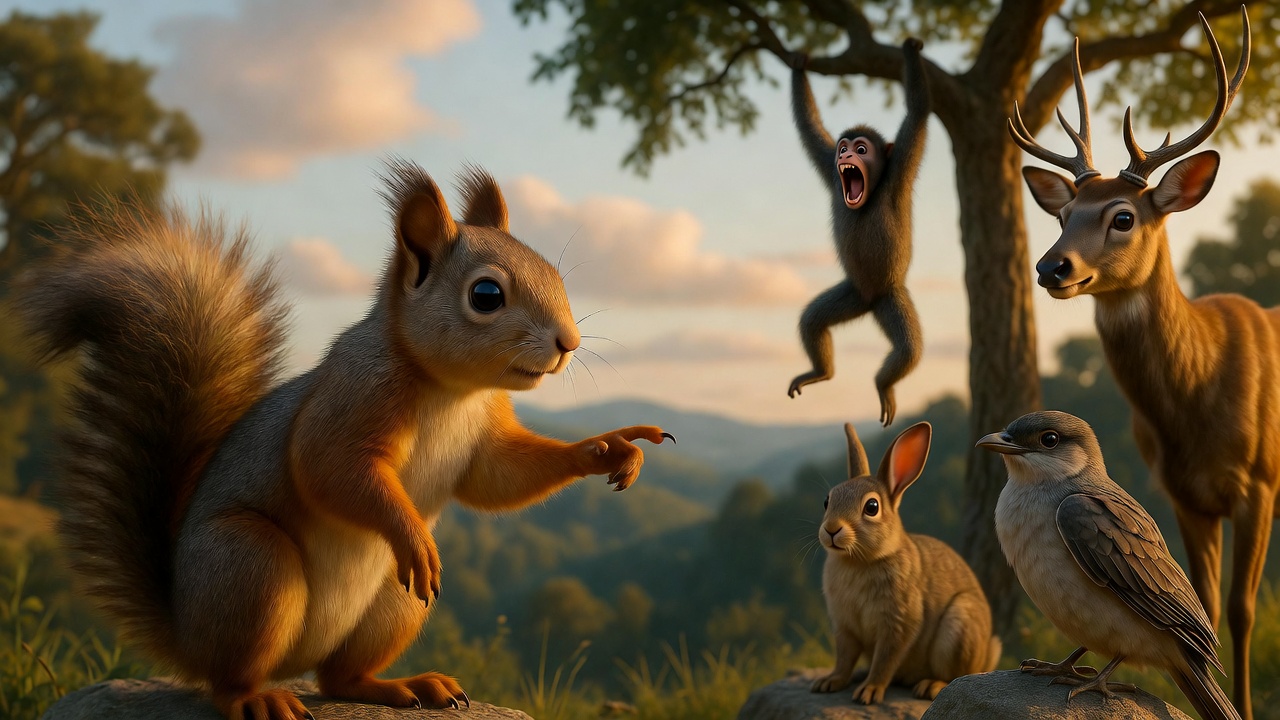
The valley where the animals lived in harmony
It was a tale of a lush valley in Africa, where many animals lived in harmony. Then one day, a terrifying sound began to echo from the forest. The sound was a roar that shook the ground and filled the air with dread. This sound returned every day, and the animals whispered in awe that a mighty, powerful creature must dwell up there in the forest.
For years, they stayed in the valleys, never daring to venture near, convinced that entering the forest meant certain death. In reverence, they built an altar at the forest’s edge and left offerings of food for what they now worshipped as a powerful god. Each morning, the food was gone, confirming their fears and faith.
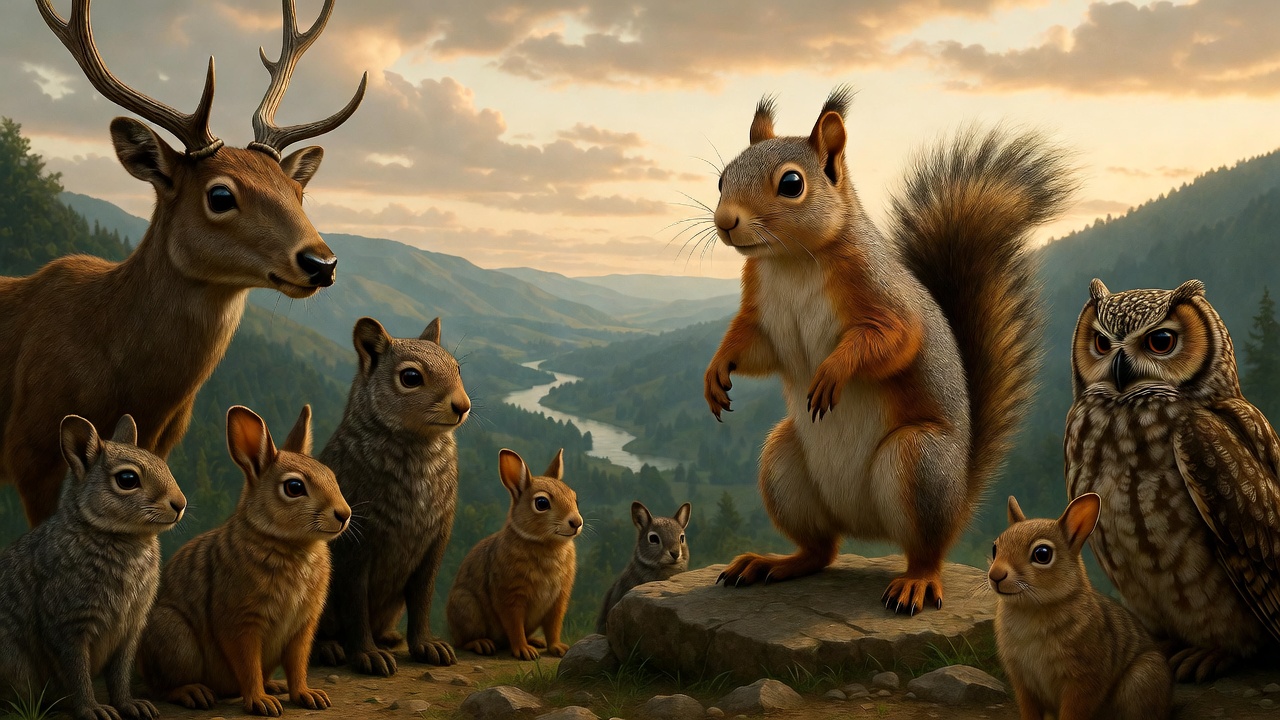
The squirrel returns unharmed
But one day, a little squirrel grew curious and bold. He decided to climb into the forest to see this god for himself. A great meeting was held, all the animals gathering, wishing him well through tears, certain he would never return. Yet, two days later, the squirrel scampered back, unharmed, gathering nuts as if nothing had happened.
The animals rushed to him: “What did you see? How did you escape death?” The squirrel agreed to tell his tale. The elders called everyone to the gathering place. They looked at the little squirrel and said, “Tell us what you saw.” With a simple shrug, he replied: “It’s just a monkey.”
Later he moved to the Magaliesberg mountains, and I would visit him there every few months, whenever I had been in Johannesburg holding sweat lodges. Over seven or eight visits I would just go and sit with him alone, in his room or on his balcony, wherever he was at the time, and we would talk.
He always addressed me with respect, as “Sir” or “Mr Niyan”. Each visit he would ask, “What do you want from me this time?” I always gave the same answer: “Nothing Baba, I just came to hear you talk.” He appreciated that. He told me everyone else always wanted something from him.
Baba Credo was a friend. We got on very well and had good conversations. He never asked anything of me, and I never asked anything of him. He recognised my initiation as a Sangoma, and my work with the sweat lodge, the sacred medicines and the didgeridoo.
When I built a round ceremonial house on the slopes of the mountain at Rustlers Valley, I named it Marimba House, after Princess Marimba, the Mother of Music in his book. On 5 May 2000, the day of the Grand Planetary Alignment, Baba Credo came to Rustlers Valley and initiated the house.
After the fire destroyed my house in 2007, Baba Credo had moved to Kuruman. Partly to keep visiting him, and partly to generate some money, we began organising tour groups to Kuruman. We arranged a taxi from Johannesburg and a small hotel for people to sleep in, and on Saturday and Sunday afternoons we sat in Baba Credo’s lounge and listened to him speak. We did this eight or nine times.
Those were some of the most inspiring times of my life. I heard many of his stories, often the same ones many times, because he had a different audience each time. They were always insightful.
At some point in those years, Baba Credo also attended a Santo Daime ceremony I facilitated with a group of friends in his chapel in Kuruman.

Baba Credo at a Santo Daime ceremony in his chapel in Kuruman
Of all the stories Baba Credo shared, the legend of Princess Marimba was my favourite. “From under a young musharagi tree alongside the river rose a sacred flamingo into the forest-scented air… and then she appeared, the Spirit of Beauty personified, radiating a beauty that spoke of goodness in her soul. Her attire was simple: a skirt of tanned cheetah skin trimmed with cowrie shells, copper necklaces, and bracelets engraved with signs of secret wisdom. This woman gave our people some of the oldest and most beautiful songs on earth and invented countless instruments, each destined to carry her name in some form or other — Marimba, the Mother of Music.” Credo ‘Vuzamazulu’ Mutwa, 1998.
Read the full legend of Princess Marimba →
The drums and marimbas I make today carry this lineage. See the handcrafted instruments →
The last time I saw him was in about 2014. Baba Credo passed away in 2020, the day before South Africa went into lockdown because of the pandemic.
Writing these stories takes time. If they mean something to you, you can support my writing here.