I was introduced to the Santo Daime community through Sérgio, after my vision of Ganesha on the beach in Florianópolis. It was 2006, a week after our retreat at Sambaqui, on the same trip to Brazil. On the day, Sérgio had family problems and couldn’t join us, but he gave us directions, and my friends and I caught a bus to Vargem Grande, where the community was. Everything ran very late, and it took four hours of bus rides to get there. We arrived just before the ceremony was about to start.
It was announced to us that we were there for the Father’s Day ceremony, a particularly long ceremony dedicated to Mestre Irineu. My friends and I took part, and that ceremony is a story in itself. It was led by Enio Staub. He was the one who poured the medicine for me. He had broken his leg and was on crutches. That was the only time I stood in his presence while I was in Brazil.
When I got home I sent him an email and invited him to come to South Africa with a small group of Daimistas. Having met me only for a brief moment, he said yes. That was the start of the Santo Daime coming to South Africa.
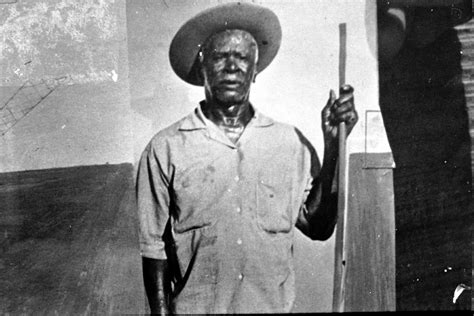
Mestre Raimundo Irineu Serra, founder of the Santo Daime tradition
I had been a bit nervous that there was a religion woven around the medicine. What drew me to this community was that they had a sweat lodge. I was told the centre was a meeting point for the alliance between the Native American Peyote Church and the Brazilian Santo Daime church. The church had a central fireplace, and the boards in the centre of the floor could be lifted out. So instead of a Santo Daime ceremony with an altar in the centre, we could hold a sacred fire ceremony with a fire in the centre. That is why this community interested me so much.
I visited three times between 2006 and 2014. Sometimes I brought friends, and once we brought the Sangoma Gogo Dlamini Nomzamani. Each time we went during the feitio, ten days to two weeks when the community gathers to prepare the sacrament. More than a hundred people take part: gathering the vines, picking the leaves, cleaning the space, beating the vine and cooking the medicine. I was a participant, there to learn and to watch.
There is no talking, no discussion, and no one dictating what is done and what is not done. There is simply a process, happening in silence. The men prepare the vine, and the women prepare the leaves.
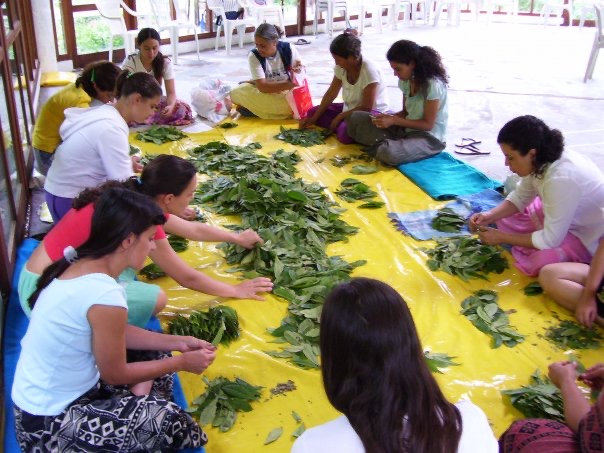
Women sorting and cleaning the rainha leaves
The women spend their time in the church with all the leaves needed for the brew. They sing to each leaf, check it for parasites, give it a wipe with a damp cloth, and put it onto another pile. It is very sacred, caring work. No one communicates with words, but there is a lot of singing.
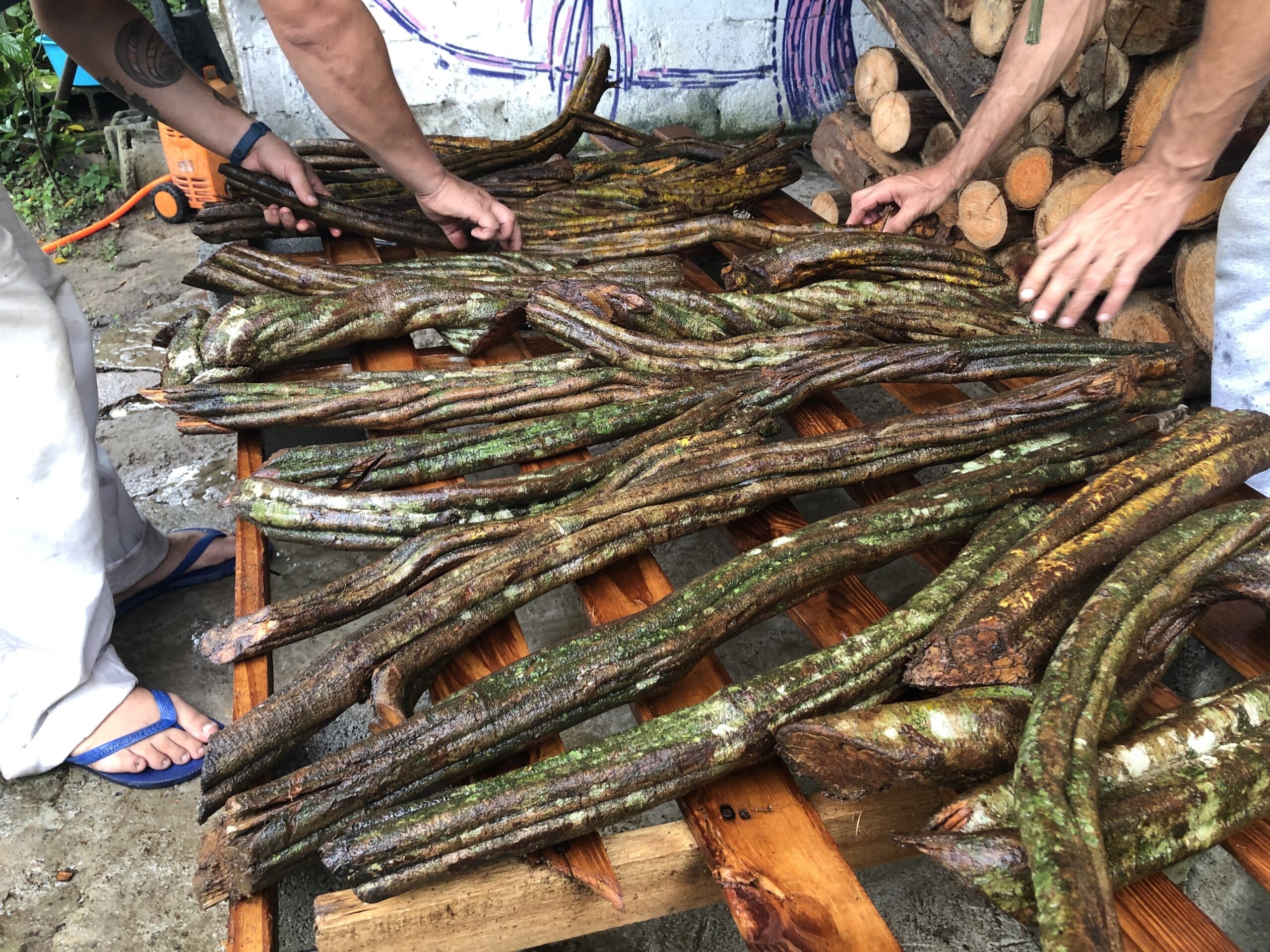
The jagube vine, washed and laid out before hammering
My favourite part was the bateção. It took place in a small shelter with twelve tree stumps, where the men beat the vine, smashing it until it was soft enough to go into the pots. We beat in rhythm, singing. It usually started at half past two or three in the morning, because it was much cooler at night and there was less chance of being overwhelmed by the heat. For two or three hours there was this beautiful sound coming from the forest, a thumping, doom, doom, doom. It made it quite obvious to anyone near that we were preparing the medicine.

The bateção, men hammering the jagube at the wooden posts
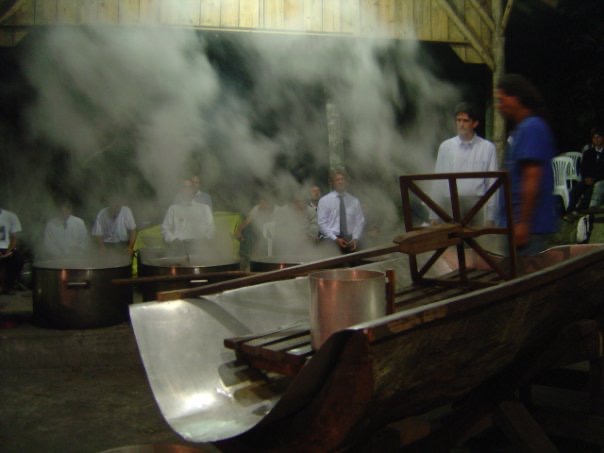
The vine and the leaves are brought together and cooked, in silence.
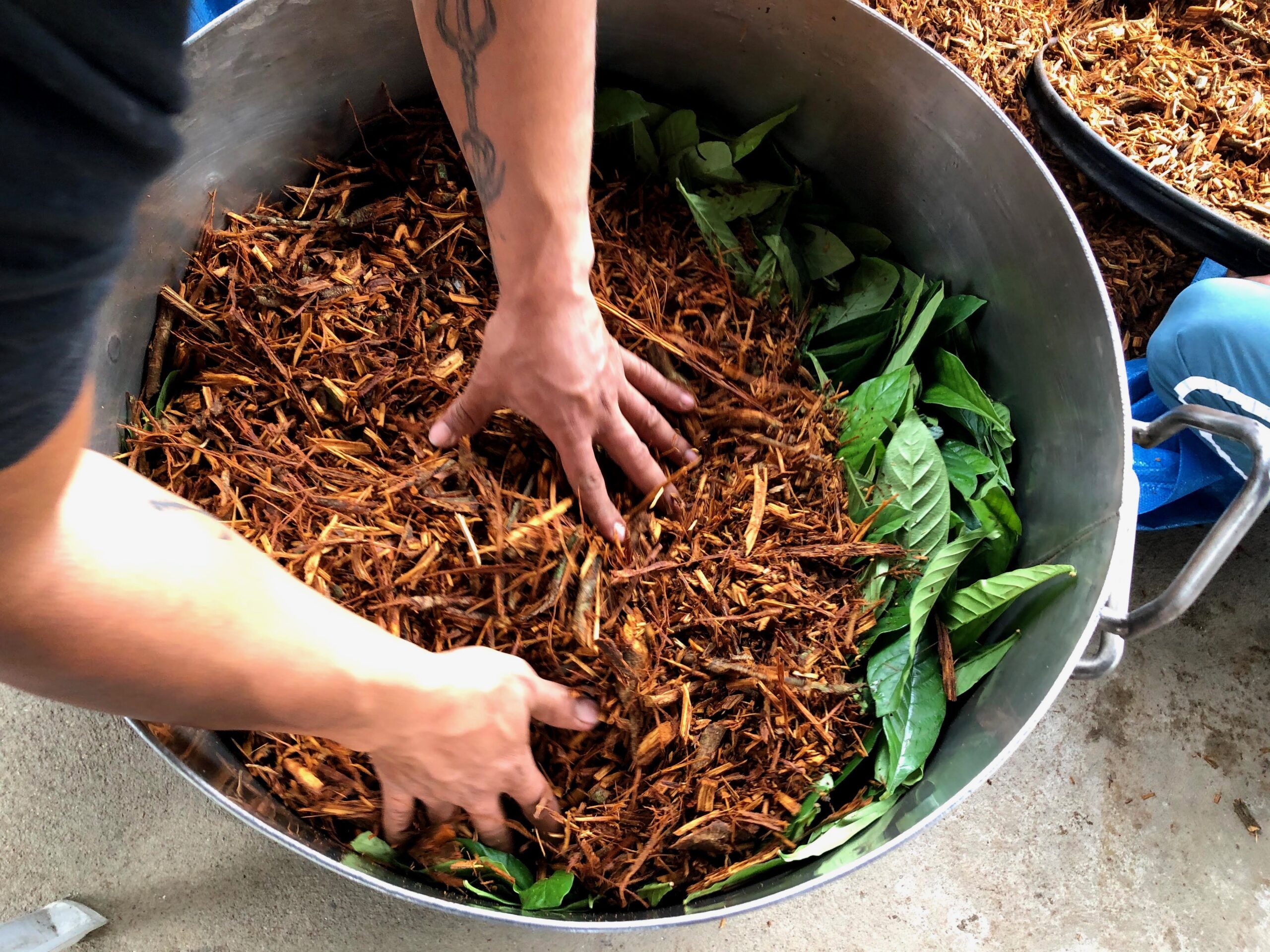


In the final stages of the cooking there is a large ceremony. The women are invited into the house where the men have been working, to sing through the last evening of preparation. Everyone sits in the steam of the ayahuasca, singing the hymns of the Santo Daime. It is a beautiful ceremony.

Writing these stories takes time. If they mean something to you, you can support my writing here.