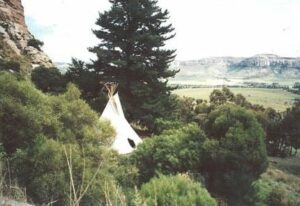
From my Kombi camper on the slopes of the mountain overlooking the spectacular valley, I had a view of Heaven. I was broke but had a front garden that money could not buy.
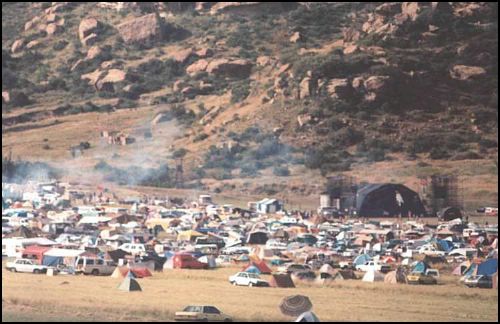
Rustlers Valley was an infamous South African community that sprang up in 1992 with the Annual Rustlers Valley Mountain Music Festival, later to become the Rustlers Easter Festival, which drew thousands of people by 1998. “Where the f#@* is Rustlers Valley?” was the first advertising campaign, and it worked well. Many people came. It became the centre for an organic shamanic community that stretched throughout South Africa, with links to the UK, Brazil, and the USA, a hub where many alternative cultures gathered to share their medicine. Suddenly in a very conservative South Africa, people were appearing who were not very visible before.

It was a time of absolute anarchy, we called it “mystical anarchy”, when many people felt as I did and were questioning our world. I connected with many teachers from emerging shamanic cultures, those who follow traditional and cultural teachings and those who were awakening to the concept of the inner shaman, learning through experience.
This was a “Free Zone,” advertised that anything goes and the police were only welcome if they attended as paying participants. It also had the reputation of being a “Sacred Place” where local Sangomas and Traditional Healers came on pilgrimages to communicate with the Ancestors.

Arriving: December 4, 1994
I was travelling in a white VW Kombi van, rebuilt and kitted out as a travel van with a bed, a fridge, and a gas stove. With me was my dog, a beautiful tricolour border collie called Aquila, and a parrot called Cupid, which my sister had asked me to take care of as it had taken to attacking her. Everything I owned was in the car. I was on my way to the Christmas Free Festival. Davide, whom I had met at a drum circle in Cape Town, had told me I should visit sometime, as I tell in From the Dark Room to the Fire.

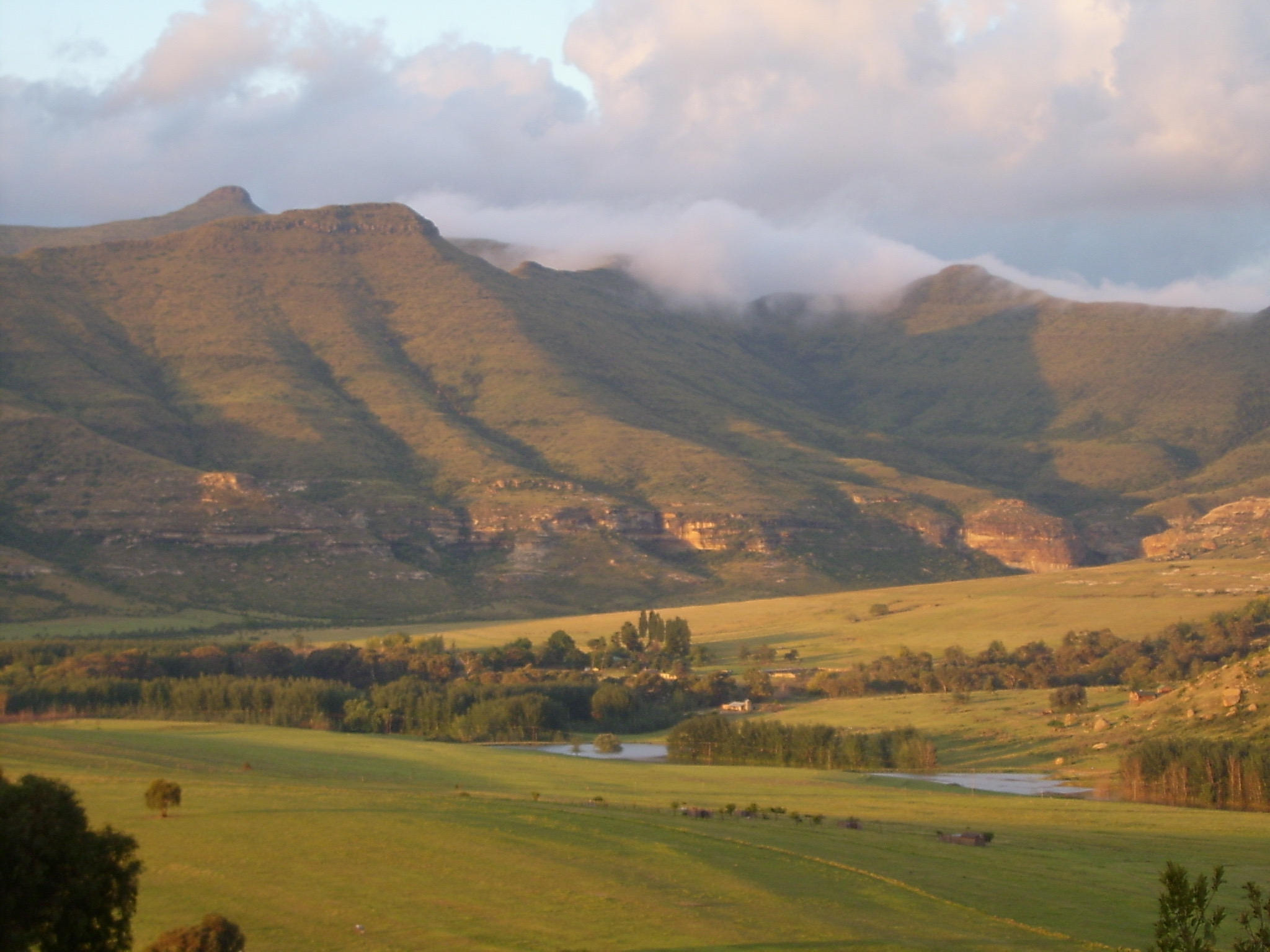
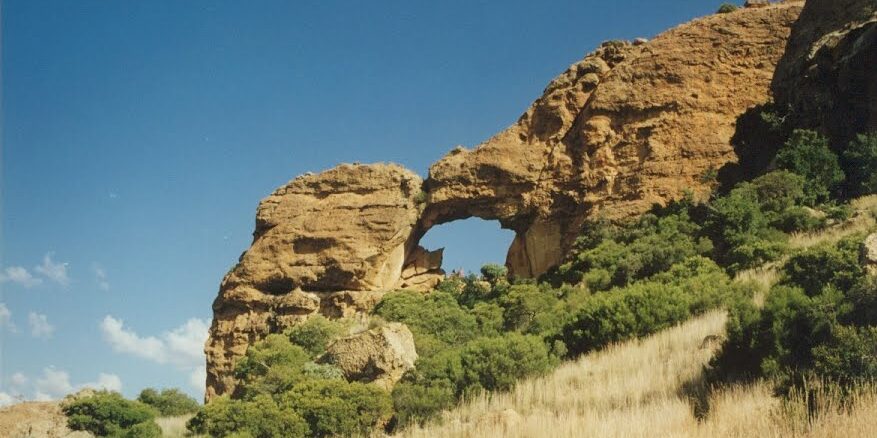
I had slept the previous night in my car in a town called Harrismith and came into the valley in the early morning, driving along the deserted dirt road over the pass. I could see the features of a unique mountain, Inyaka Lusoba, the mountain with the eye, or the Sangoma’s eye. It looks like a dragon when one walks on top. It has a rock surface that looks like dragon scales.
The morning was crisp and cold. The sun was glowing over the sandstone mountain peaks, and the whole image was spectacular. I remember thinking that this was like entering another universe. The light was surreal, and the wisps of mist were catching the rays of the rising sun and sending out rainbows of sparkle and colours over the dew-laden mountains.
As I rounded the corner toward the Rustlers gates, four South African policemen in full combat gear stepped in front of my car. They had their sights on the sticker on my Kombi that said “Hemp will save the planet.” They poked around, hassled me a bit, but were more interested in the talking parrot than trying to bust me. They let me continue, and I arrived where I would live for the next twenty years.

The Firekeeper and the Tipi Project
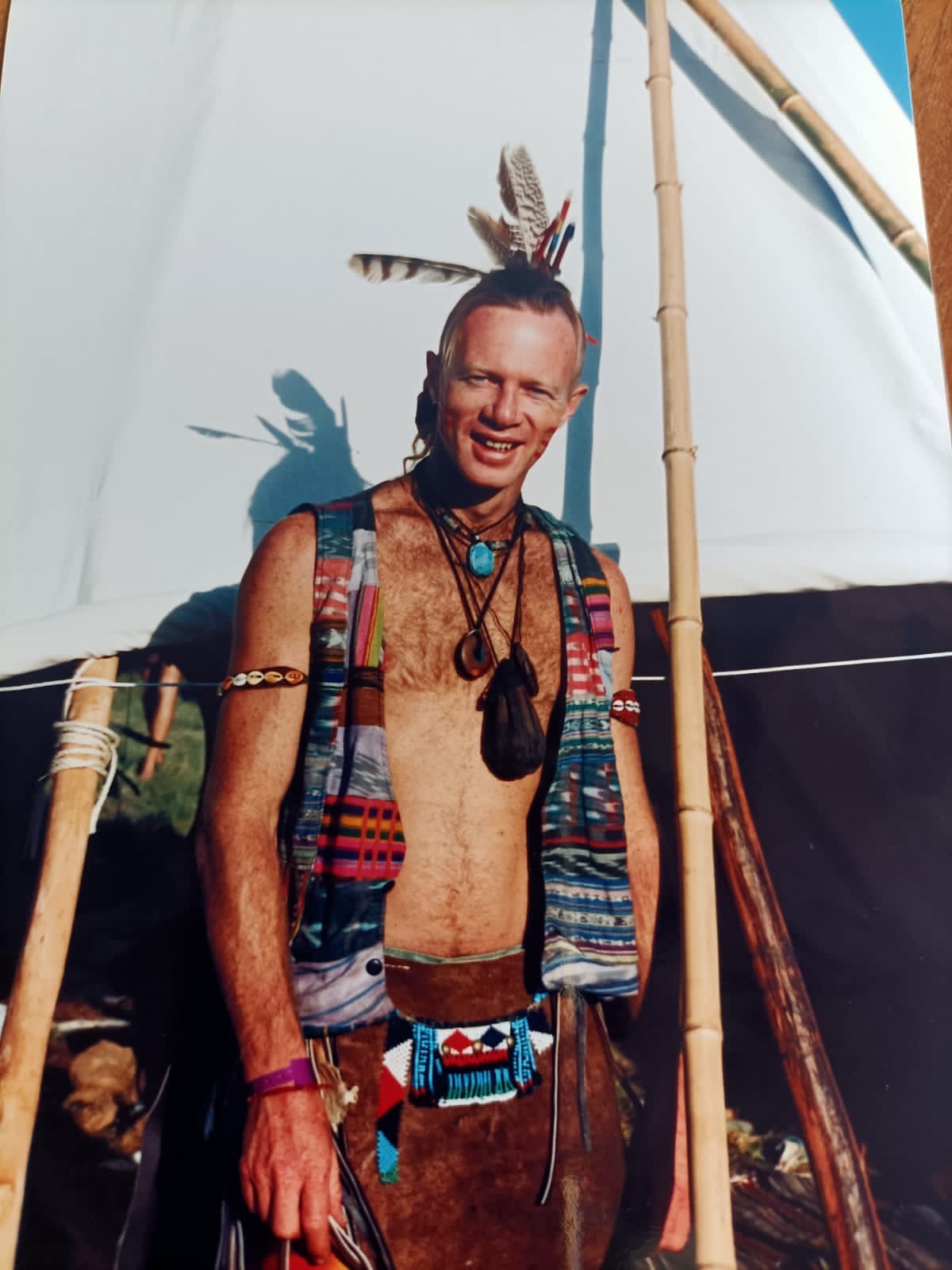
I came to the festival as a paying guest, and when it ended I didn’t want to leave. To be able to stay, I came to an arrangement with the owner of the farm. He made me master of ceremonies, and my job was to make sure there were always fires burning at the festivals and gatherings that happened there frequently. After a while, I became known as the firekeeper.
I proposed to the farm owner that I would like to recreate a Native American Tipi village. I would source the tipis and the poles, and network with the dwellers, thus adding to the vibe of the festivals. He accepted. Over the next 15 years, I would set up tipis wherever we went: Splashy Fen Festival, Shongweni Festival, Grahamstown Festival, and three festivals a year at Rustlers Valley during Christmas, Easter, and Spring Equinox.
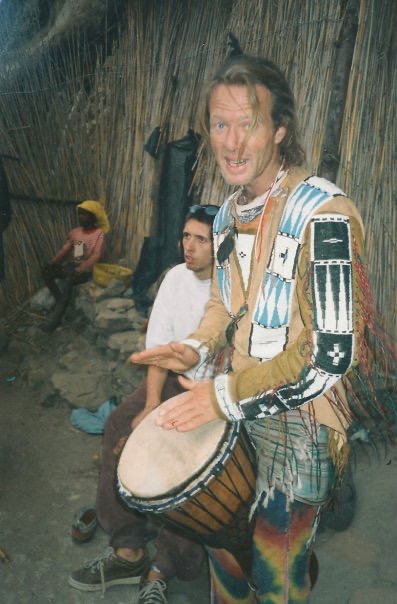
I did not have any money. A fire in Cape Town had taken everything, as I tell in From the Dark Room to the Fire. I had arrived as a fashion photographer without a camera. So I decided to let it go. I made a new contract with the universe. My tools were a didgeridoo which I was learning to play, and a djembe drum, which I had made myself.
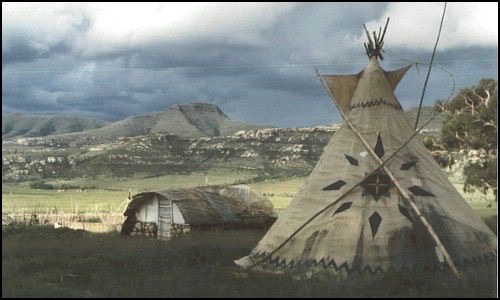
For about six months I lived in the Kombi. Then for the next six years, I lived in a tipi in the mountains without a job or a bank account. By December 1996, I had built a tipi circle around a 36-point medicine wheel made with huge standing stones, 30 metres in circumference, based on Sun Bear’s “Dancing with the Wheel.” The circle had tipis at a 60-metre circumference. It was beautiful. And it was in one of these tipis in the circle around the medicine wheel that I experienced my first contact with Ayahuasca, opening my world to a whole new level of perception.
“Rustlers Valley was a place where the veil between the worlds was extremely thin.”
The End of an Era
Rustlers Valley was a place where the veil between the worlds was extremely thin. Unfortunately, this is no longer true. The fire in September 2007, which burned down most of the Rustlers Valley mountain lodge, closed that portal. It was clear to me that it was the people who had created this sacred space and that all spaces are sacred, that working with the love of community was what created this space. Without the community, the valley was still spectacular, and the Rustlers Valley we knew was gone.
A few years later, in 2014, the farm was sold because we could no longer pay our bills. The new owners changed the name from “Rustlers Valley” to “Eagle Valley.” The magic had ended. The new owner evicted me, and I left in December 2014.
Writing these stories takes time. If they mean something to you, you can support my writing here.
Continue the Journey