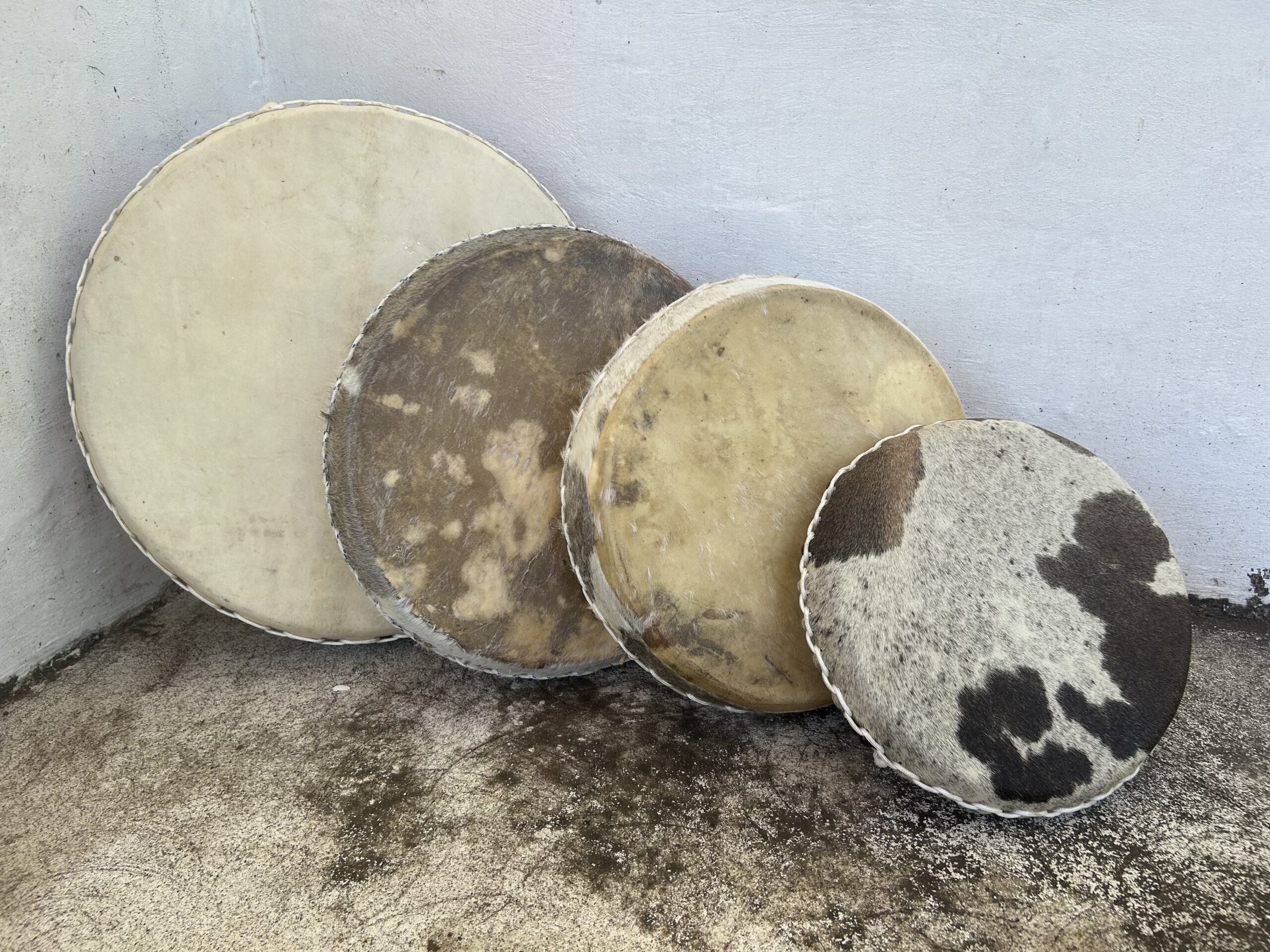
Building Drums
The tradition I learned from the Zulu drum builders is simple and exacting. Every decision, which wood, which hide, how tight, how long, shows up later in the sound.
The Body
Guapinol, the singing wood of Costa Rica
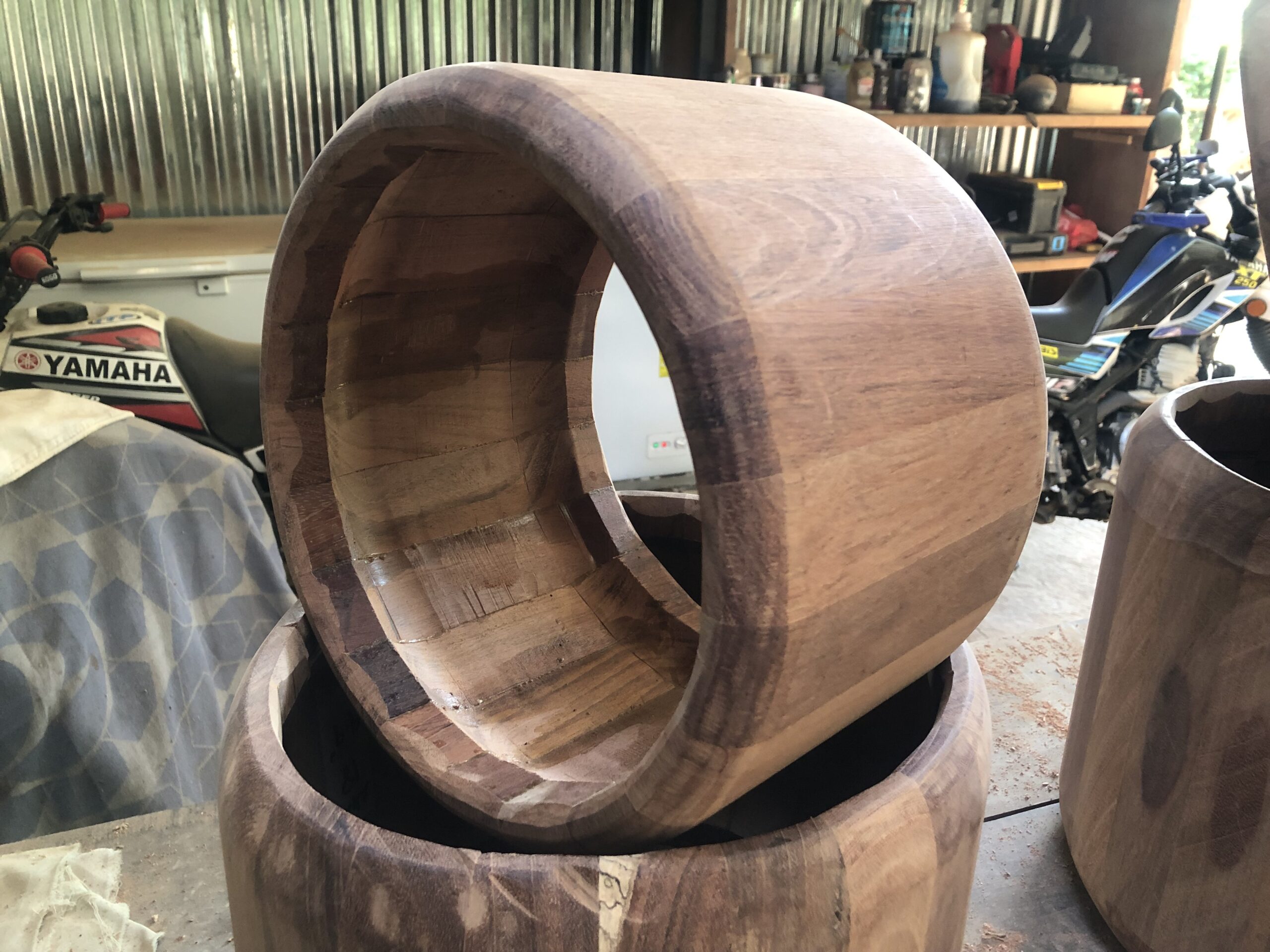
The wood is Guapinol. Strike a piece and it rings, with a warmth and sustain few tropical hardwoods have.
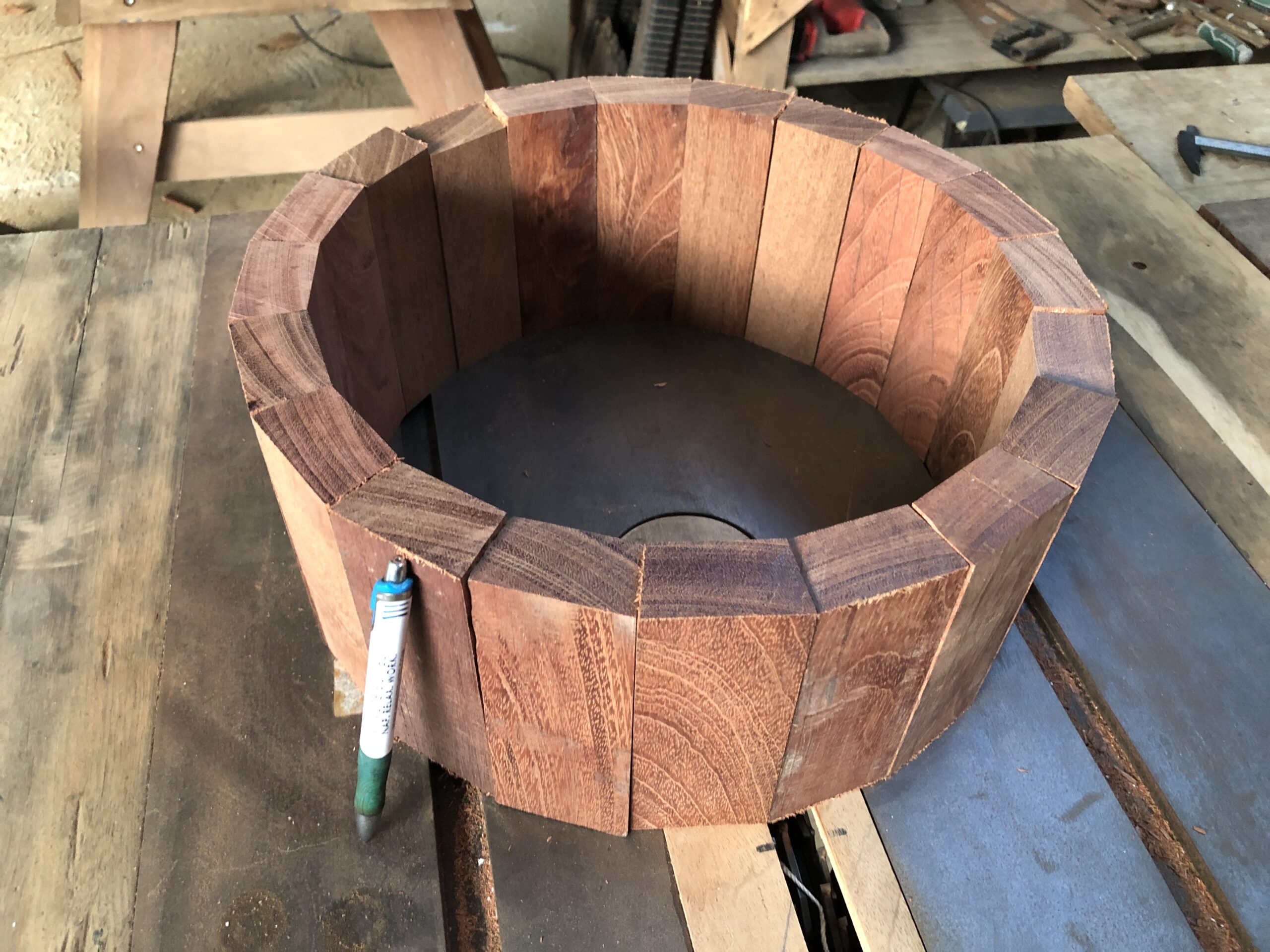
The body begins as staves of Guapinol, cut and angled so they meet cleanly in a circle.
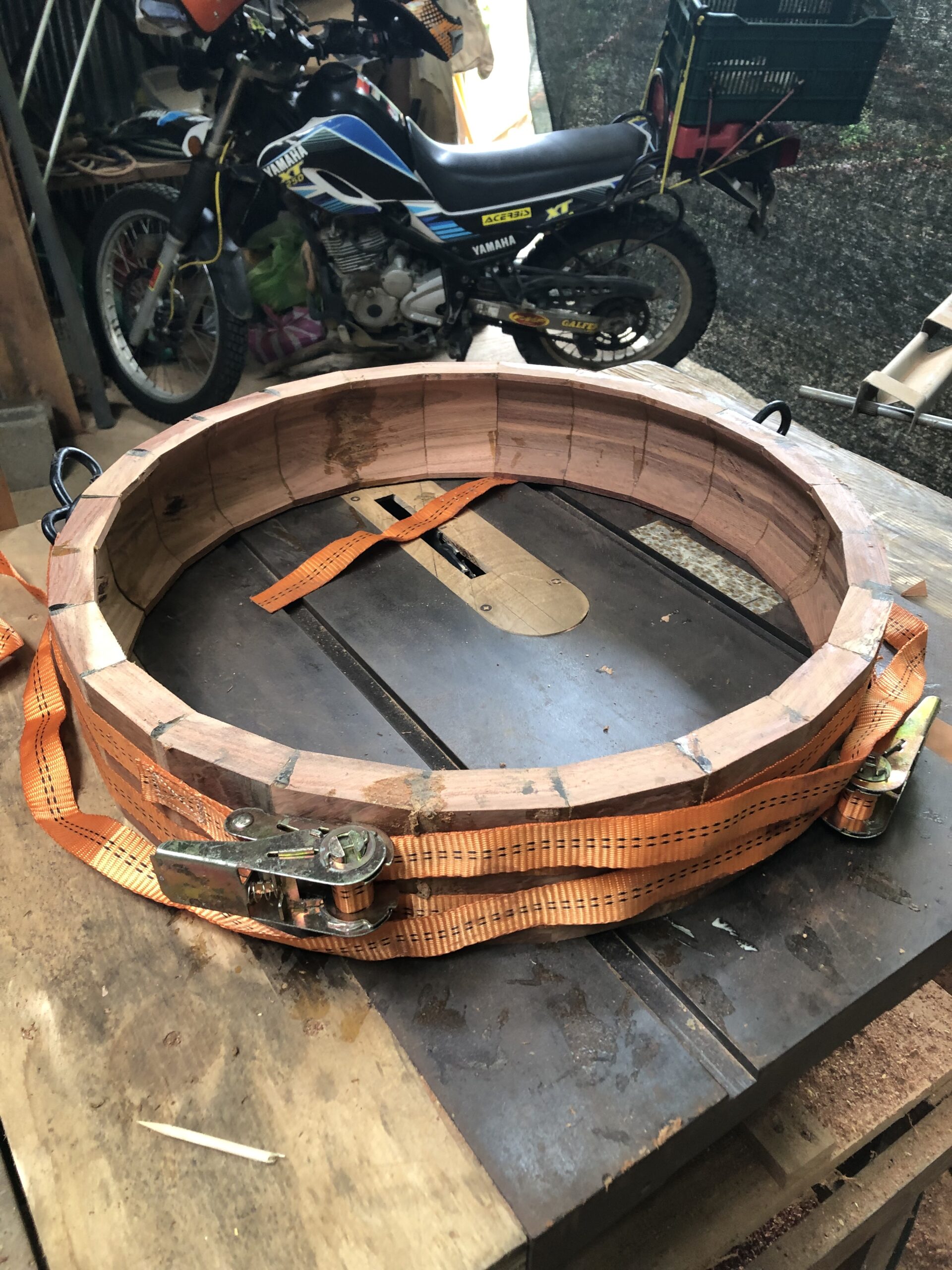
Pulled together with ratchet straps and clamped while the glue sets.
Then sanded, grit by grit, until the joints disappear into one body.
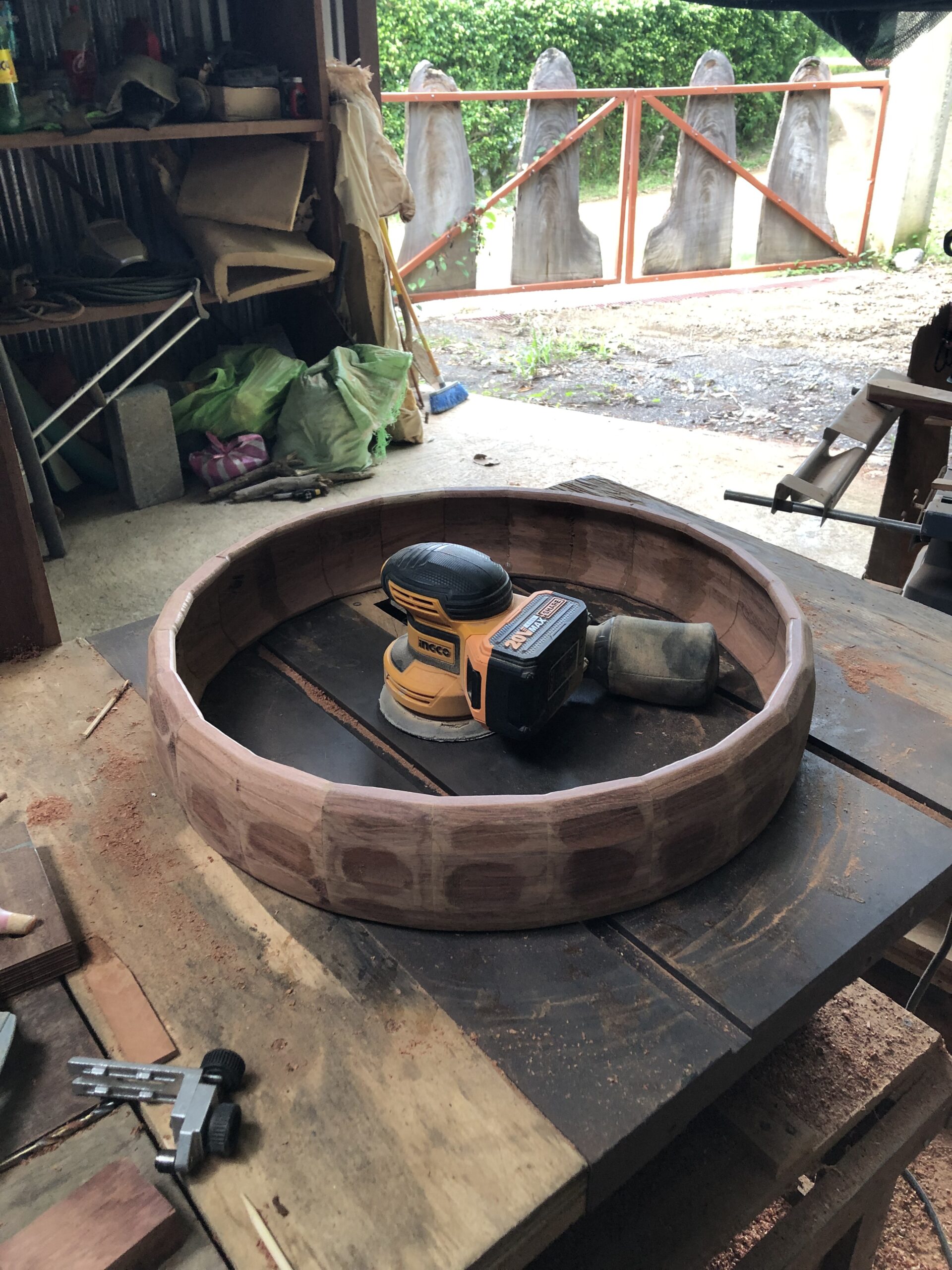
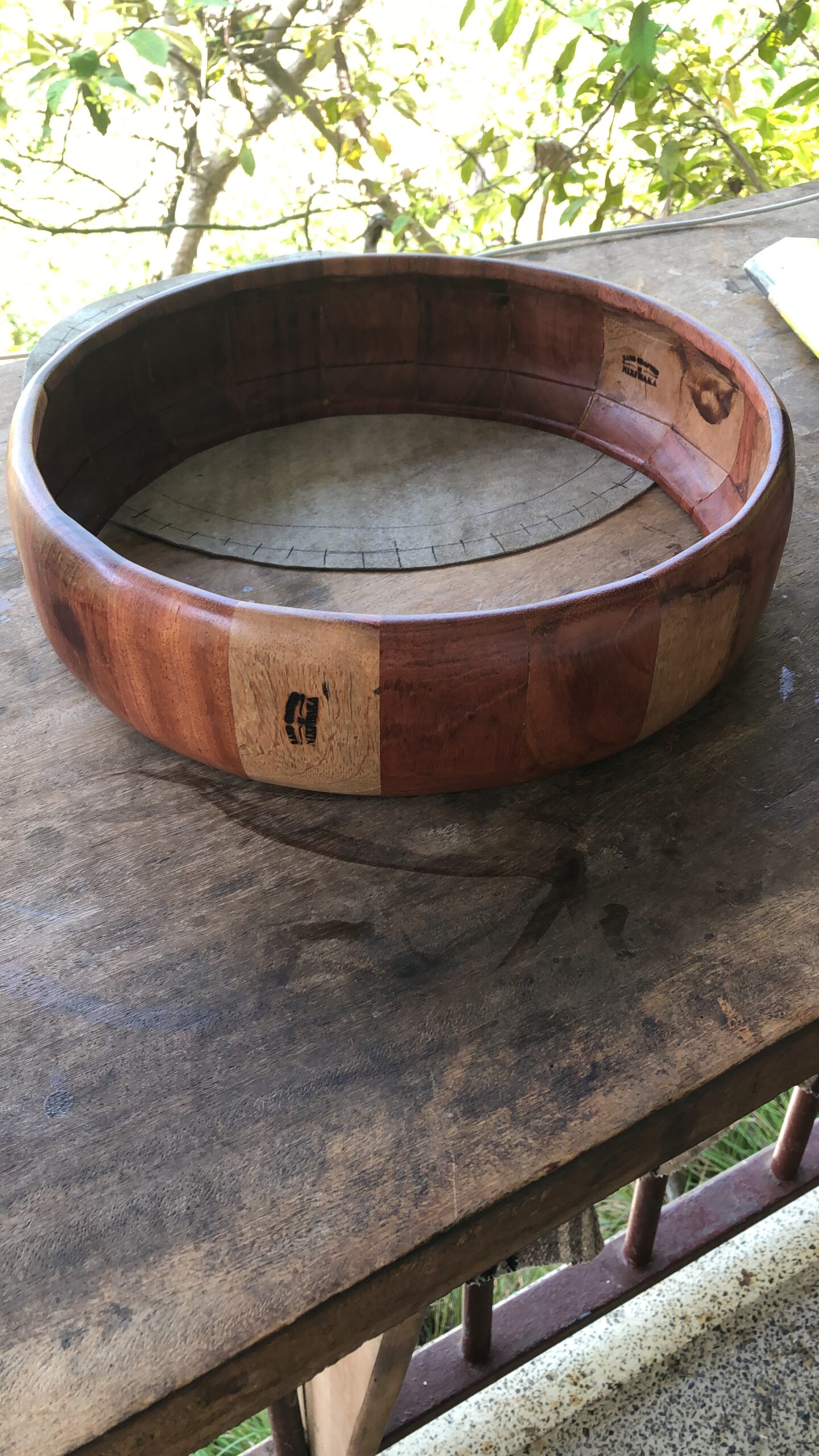
By the end of the sanding, the body has changed character entirely.
The Skin
Natural cowhide, selected, prepared, punched
The skin is natural cowhide, as the Zulu builders taught me.
Cleaned, stretched flat, and punched around the edge for the ropes.
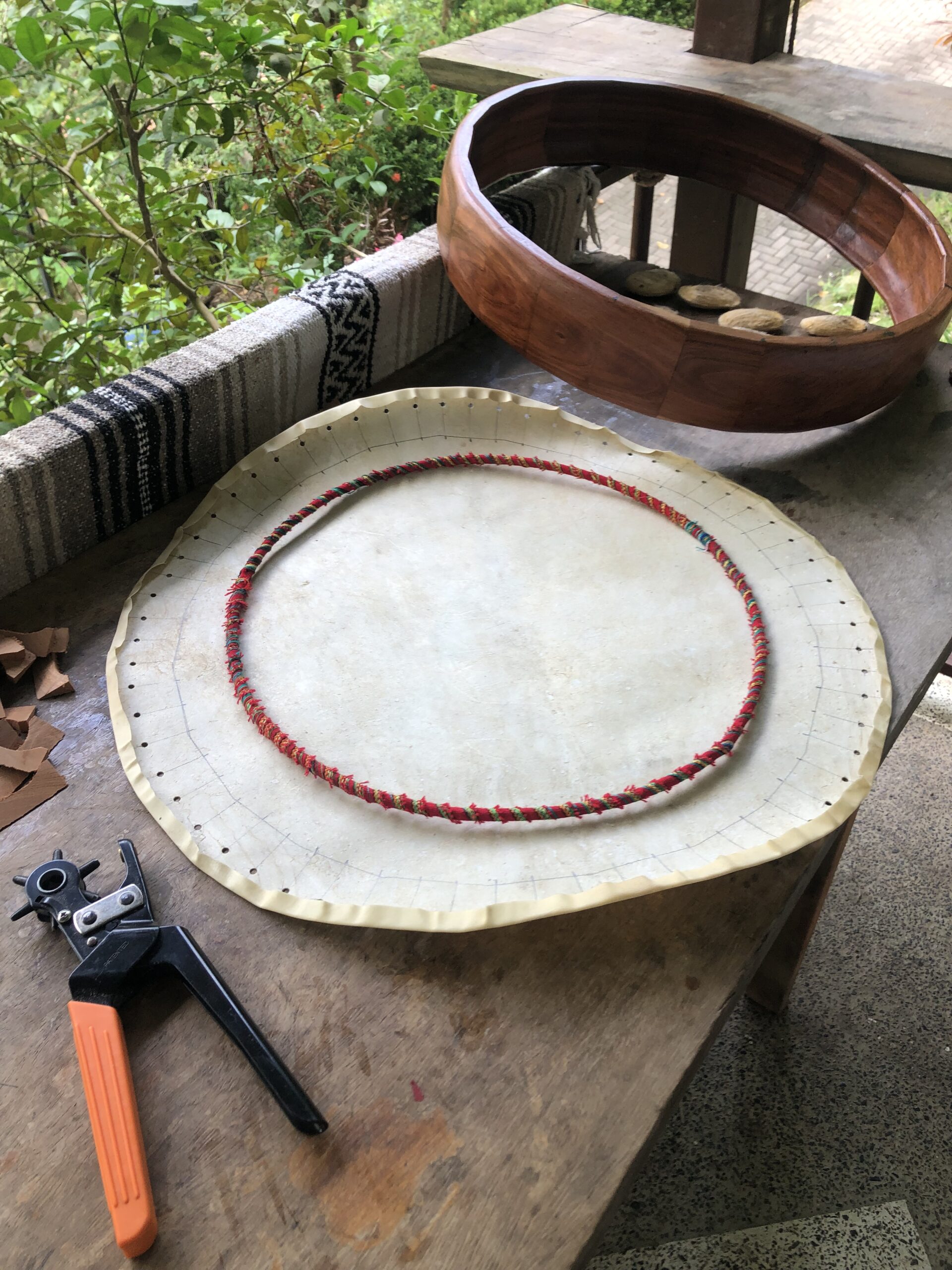
The ring is rope, wrapped tightly around a rope core.
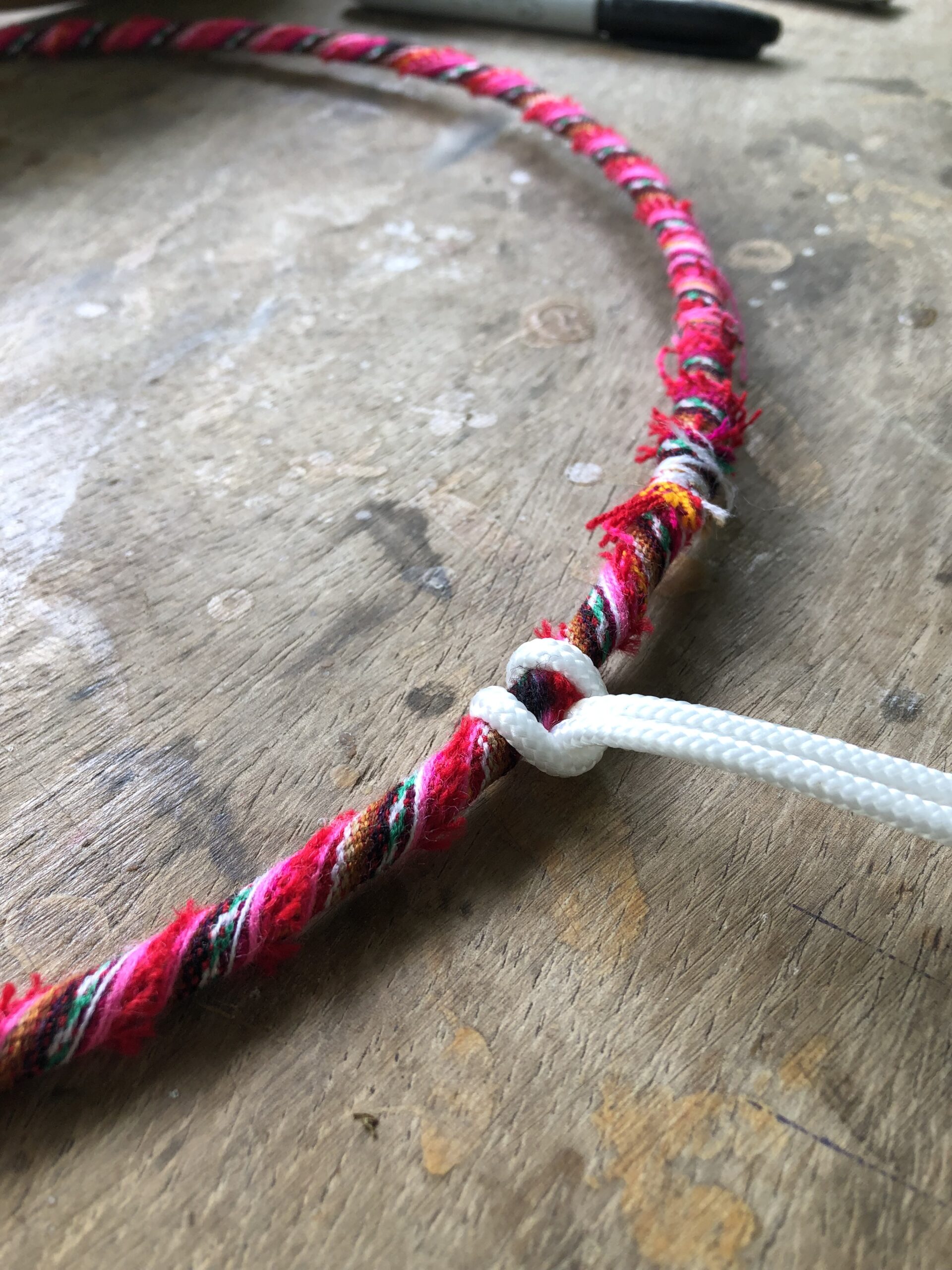
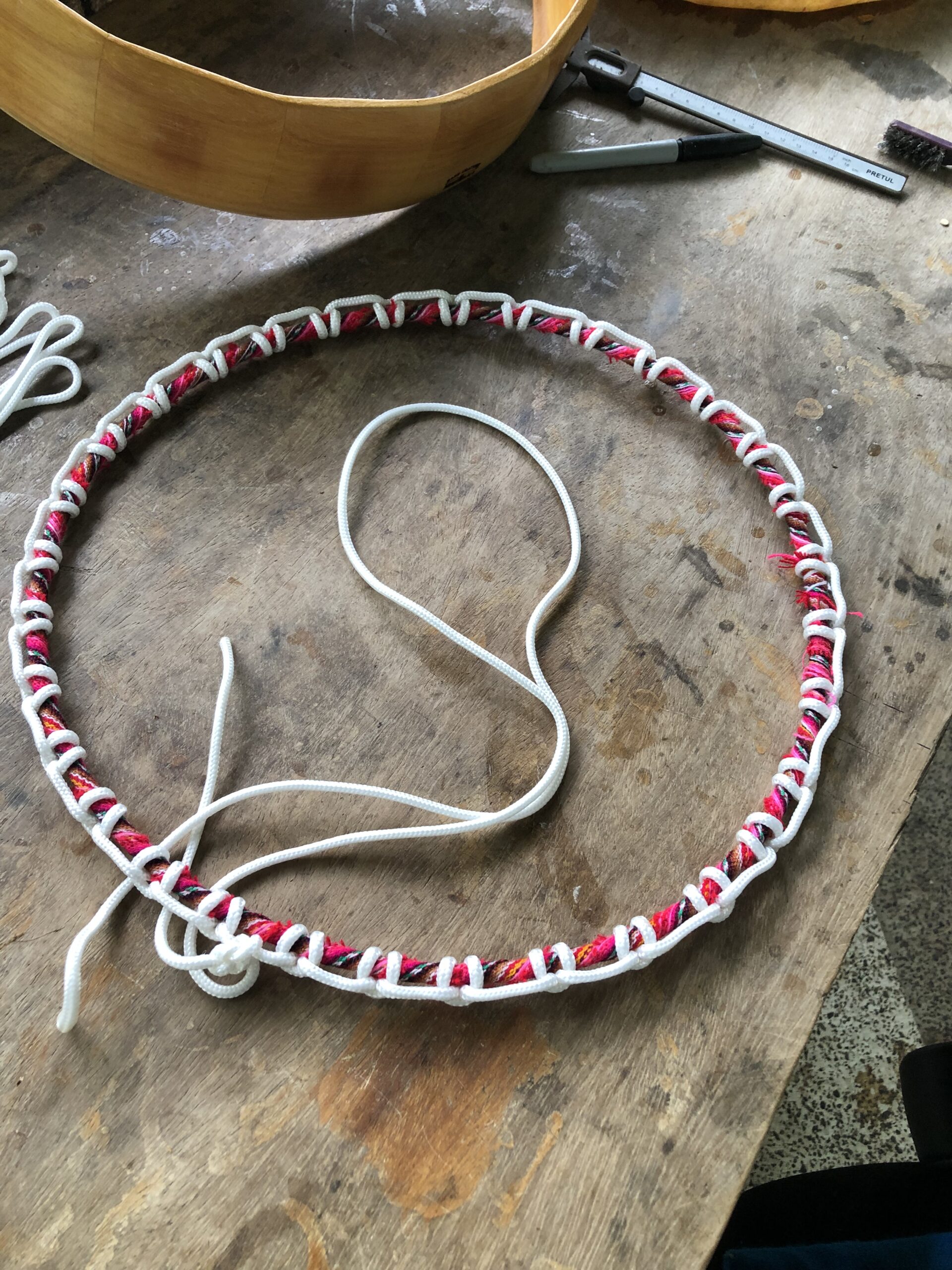
The Rings & Rope System
Tunable by hand · Built for humid conditions
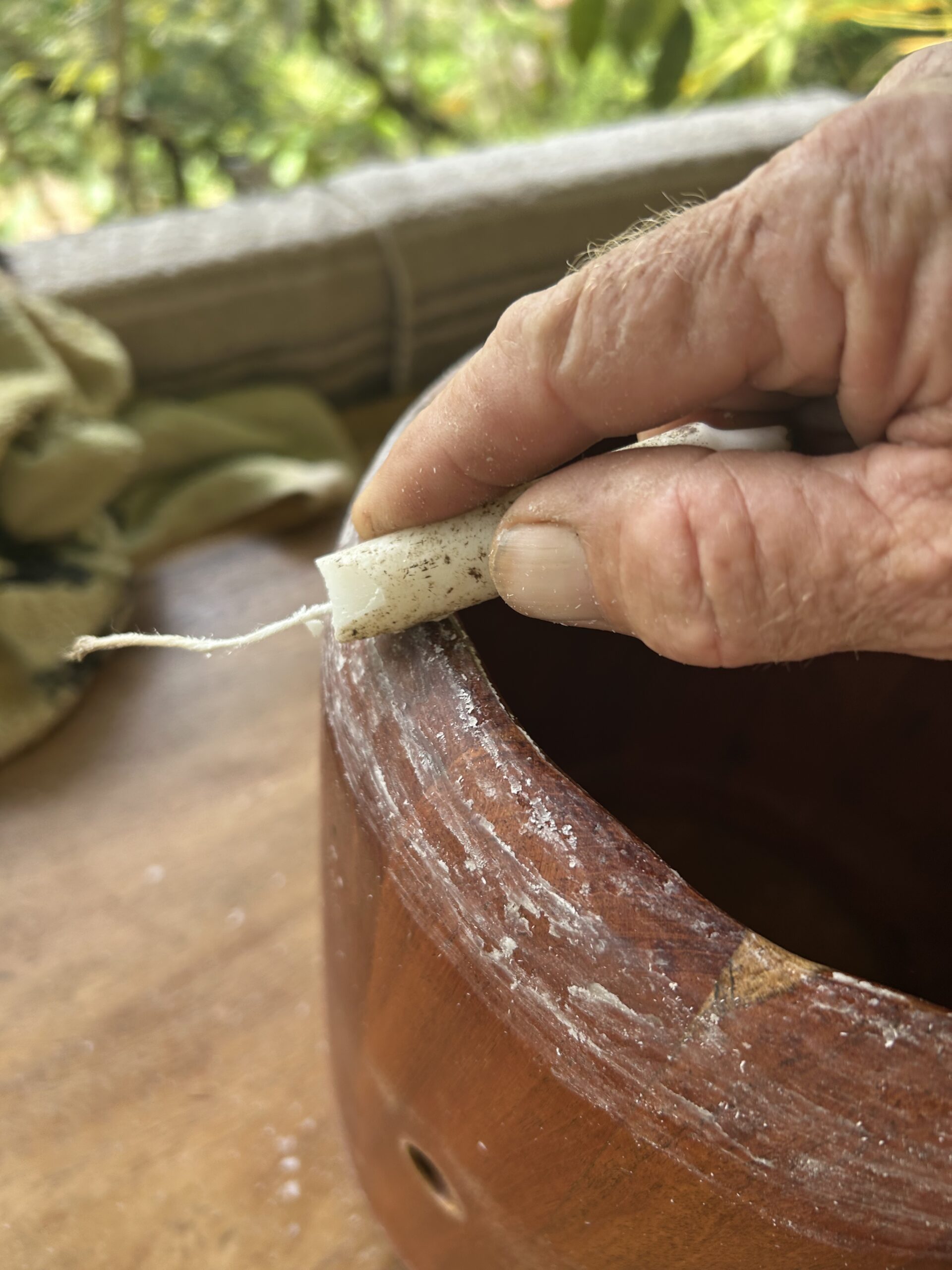
Before the skin goes on, the body is treated where the ropes will sit.
The damp hide is laid over the body and laced down to the ring. This is the most demanding part of the build.
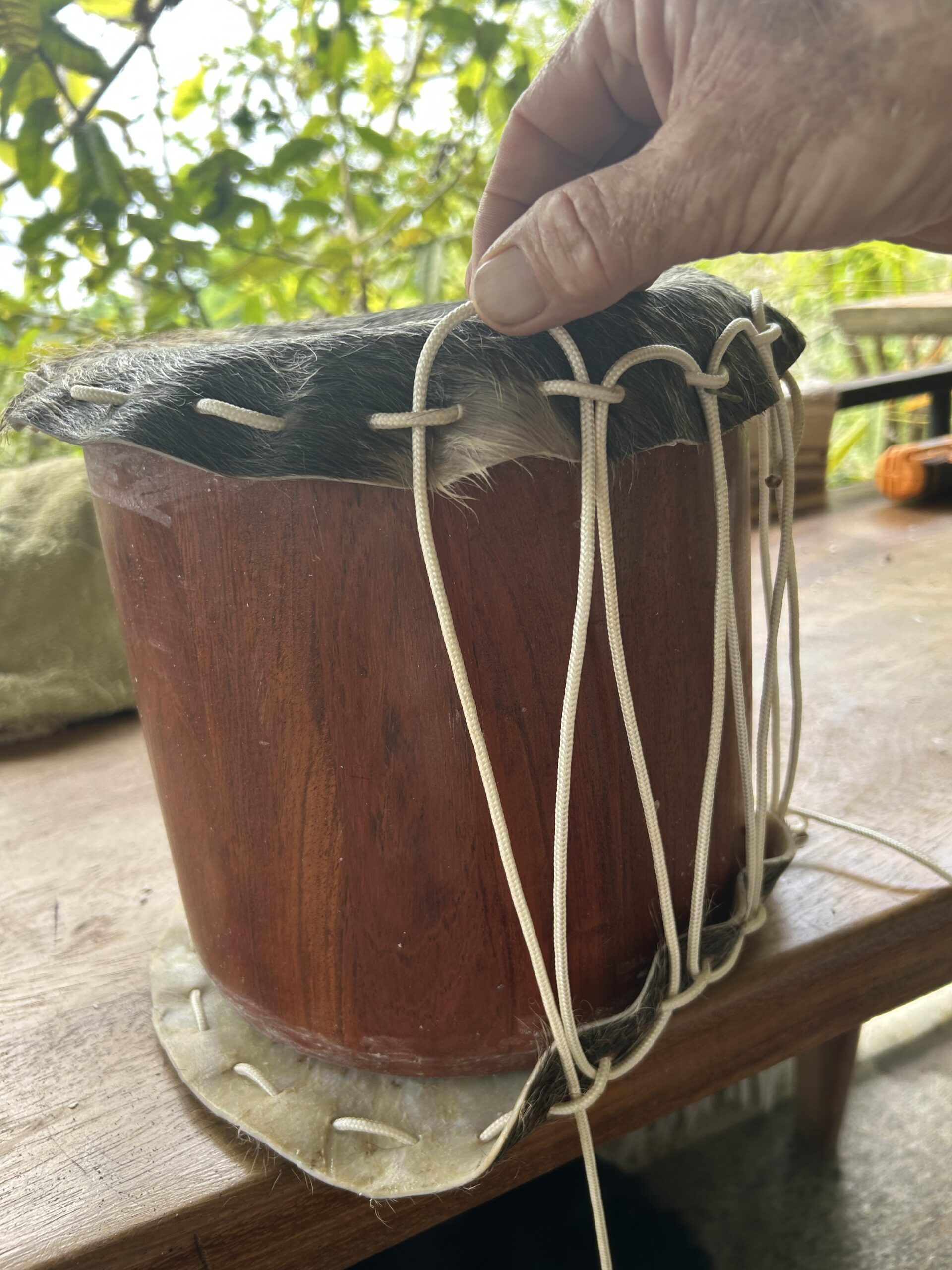
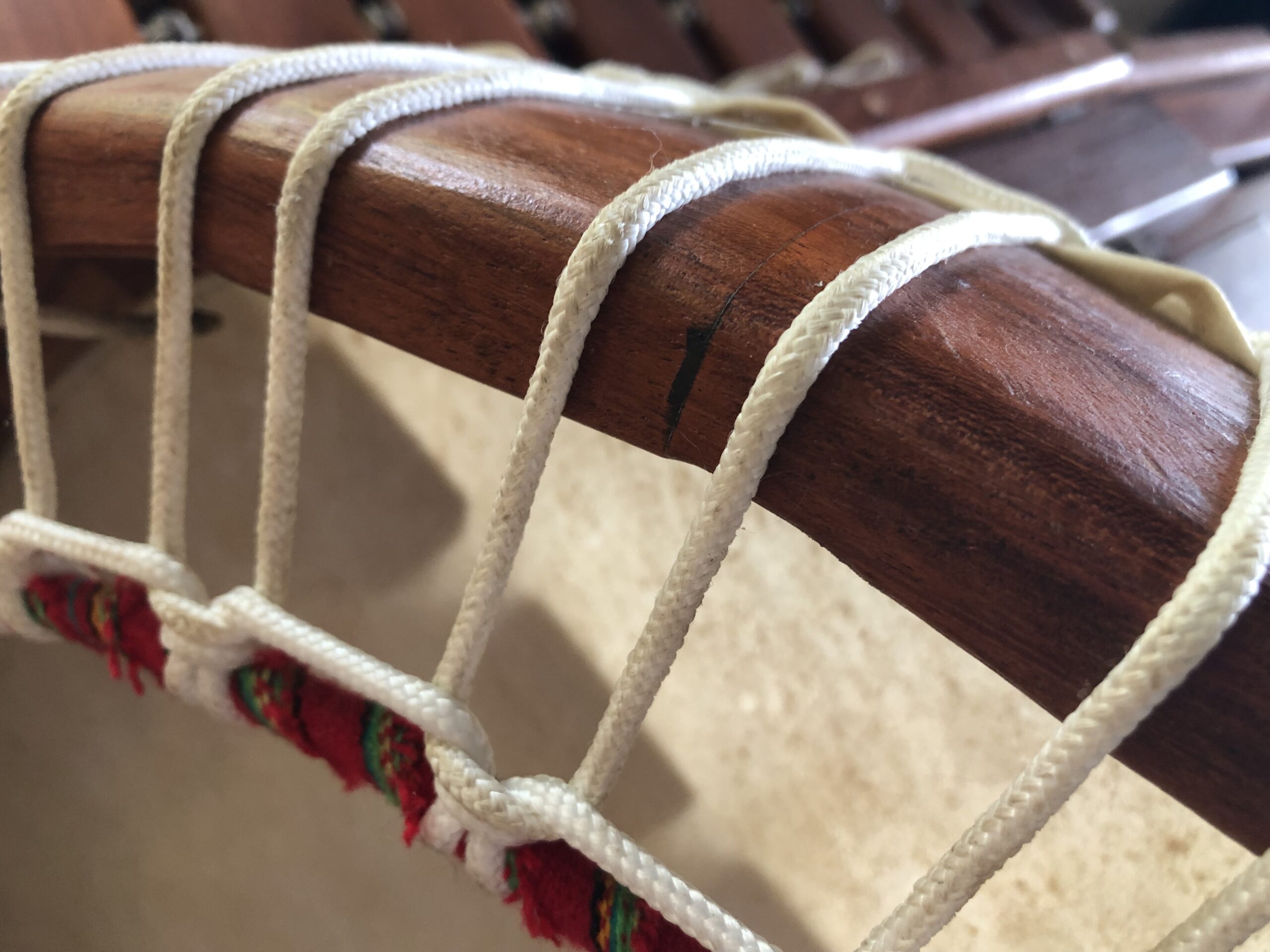
Threaded but not yet tightened, the drum looks temporary.
The ropes mean the drum can always be tuned by hand, whatever the weather.
I have played these drums in the rain, in the heat, and in the cold mountain air of the highlands. They hold. They can always be brought back into pitch.
Then the drum rests while the skin dries and the tension settles.
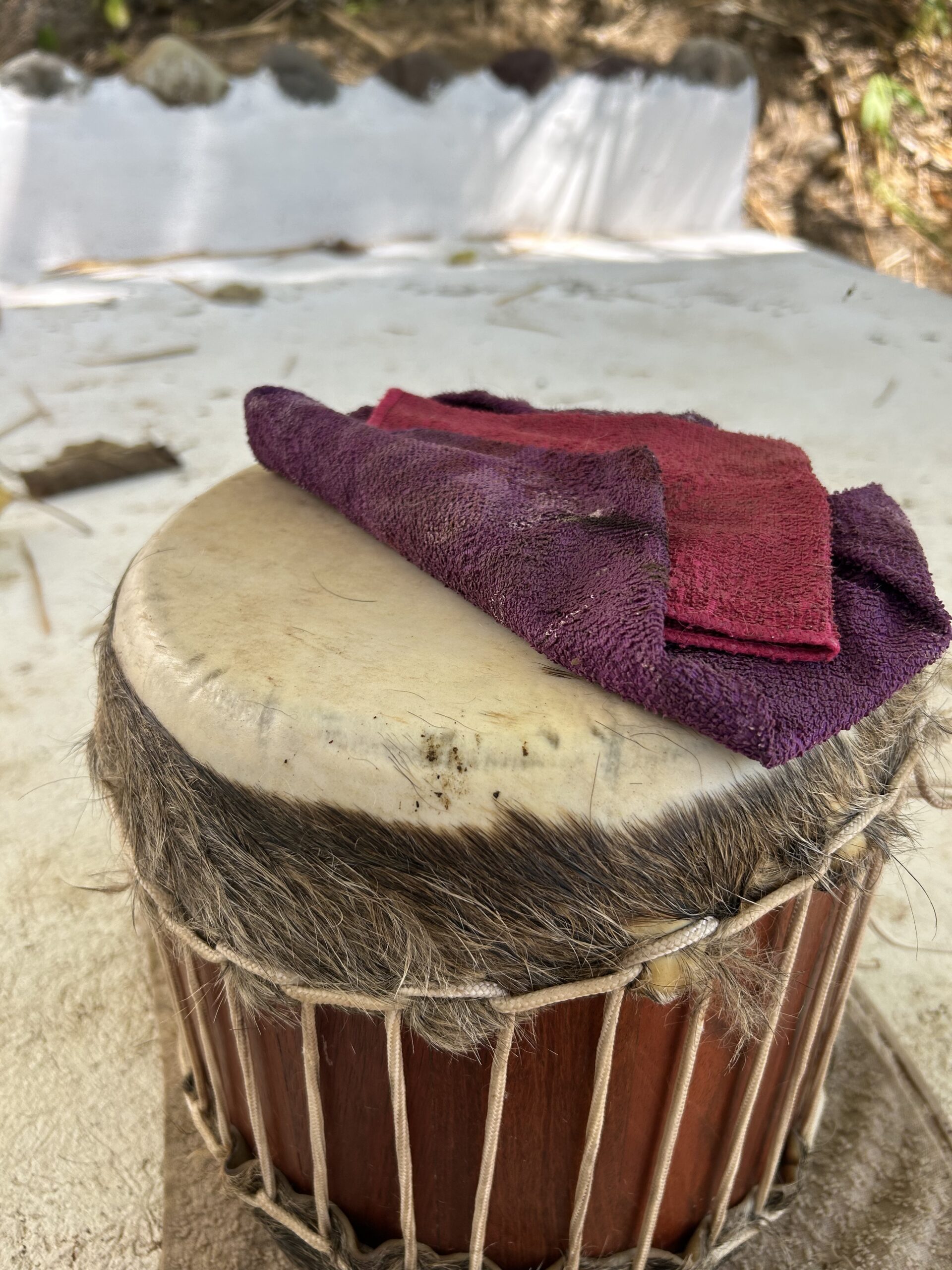
The Result
A drum that sounds the way a drum should sound
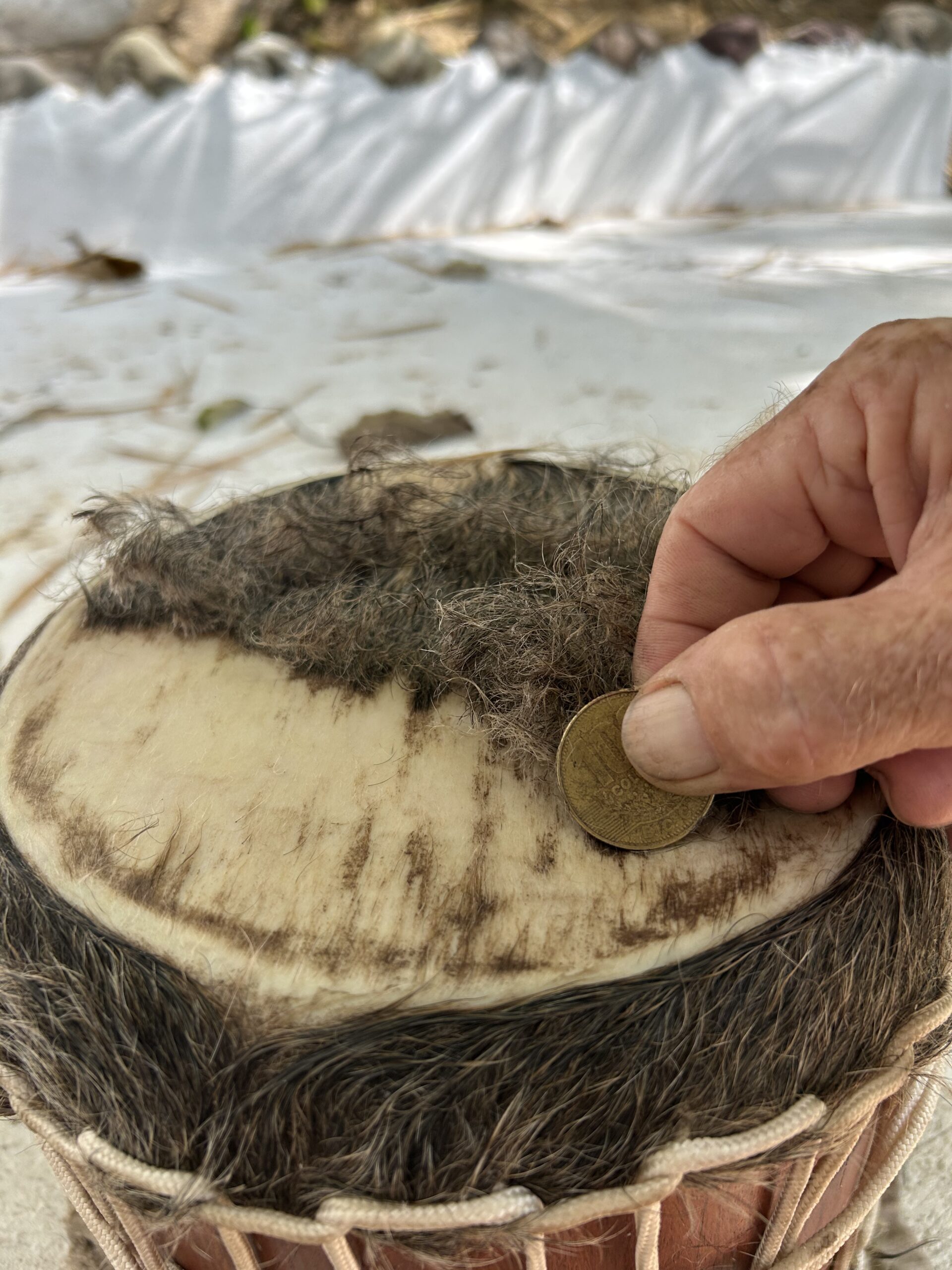
When the skin is dry and the tension has settled, I tune it and listen.
A voice.
That is what I am making: a voice that belongs to the wood it came from and the hands that shaped it, and that will carry whatever is asked of it, ceremony, music, prayer, or simply the pleasure of being played.